
Hair Transplant DesignHair Transplant Design
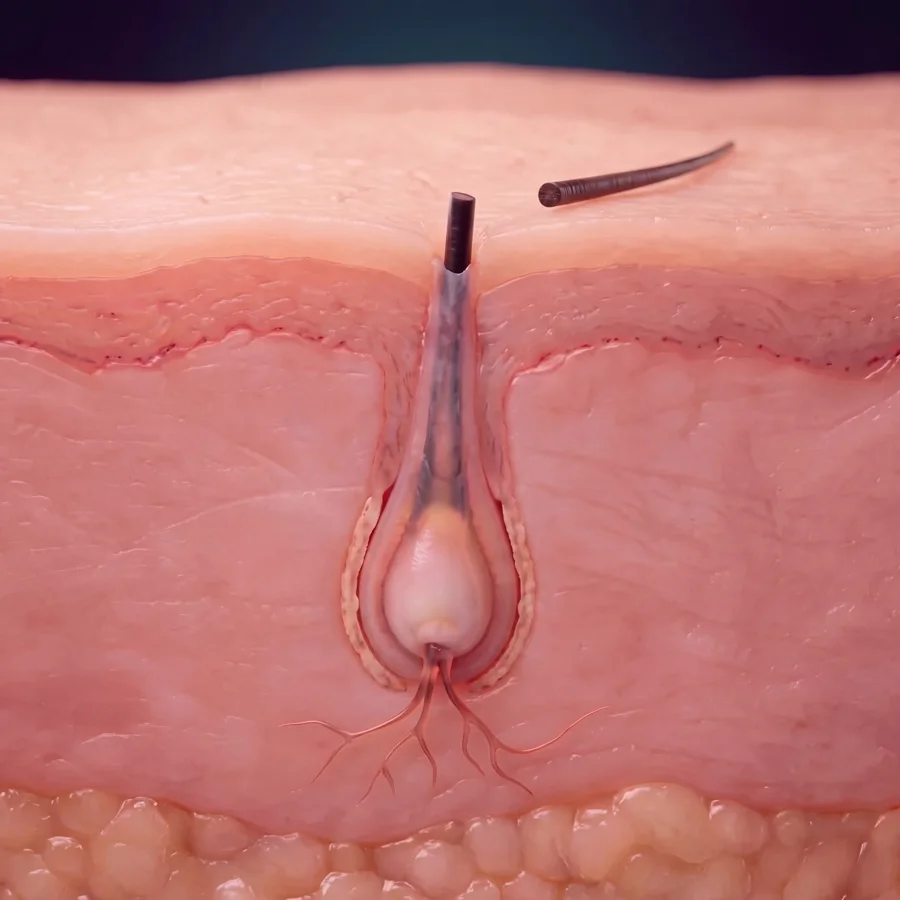
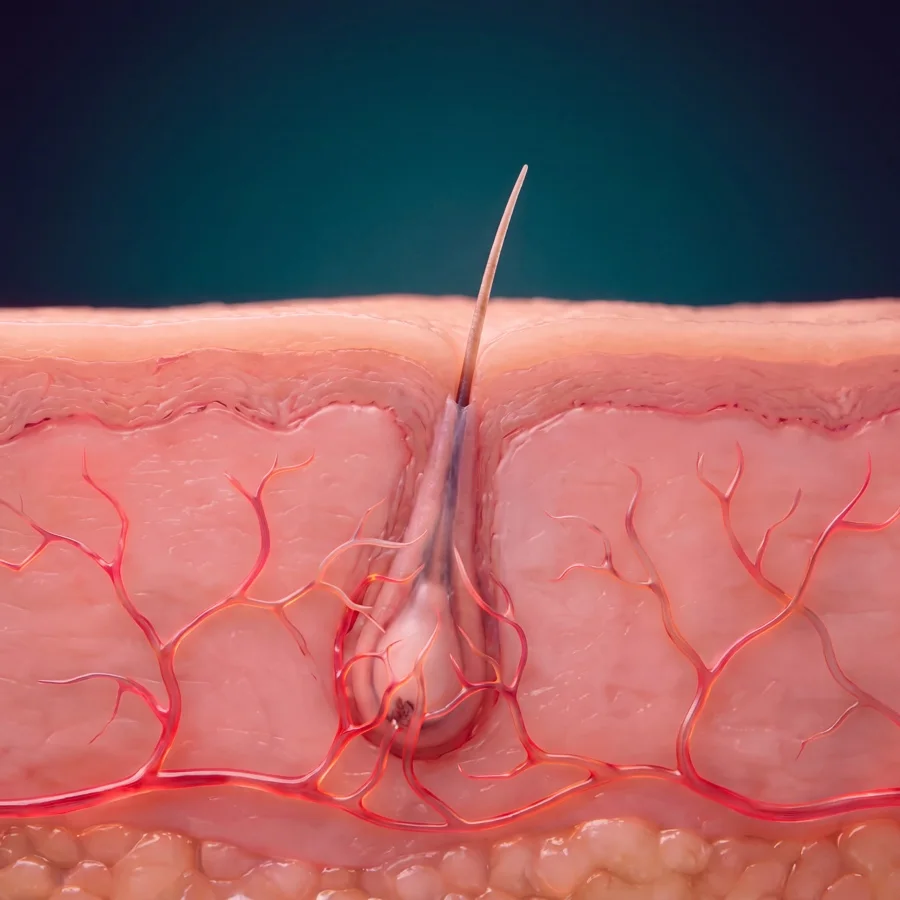
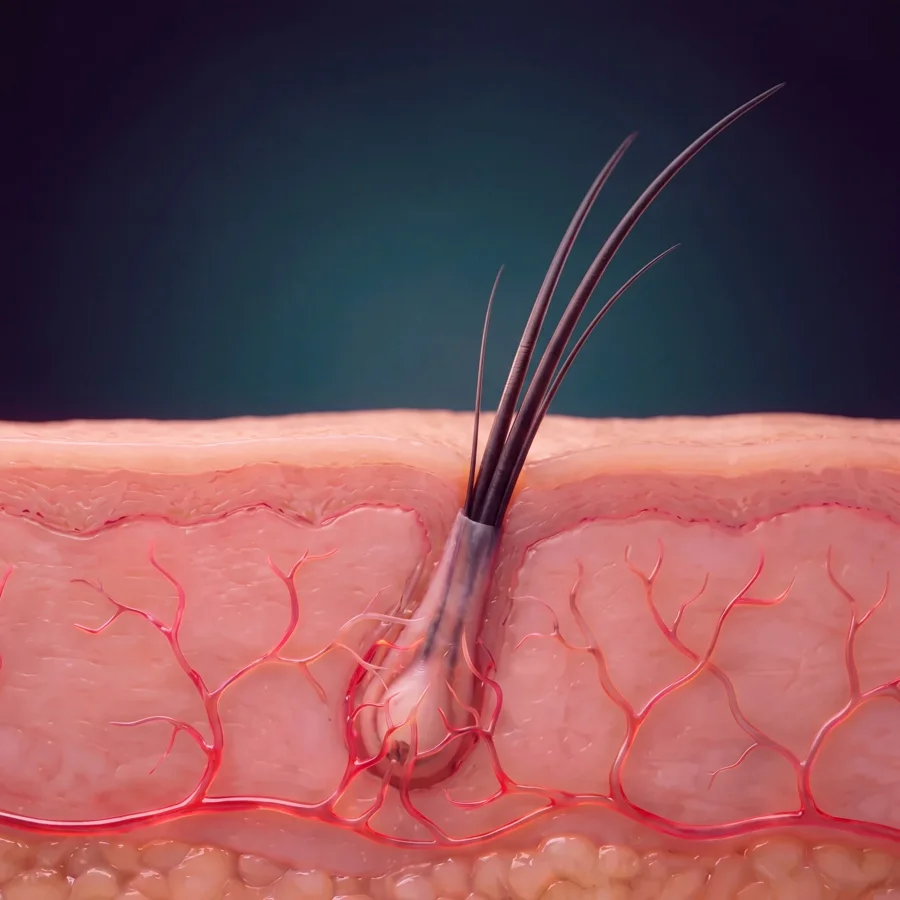
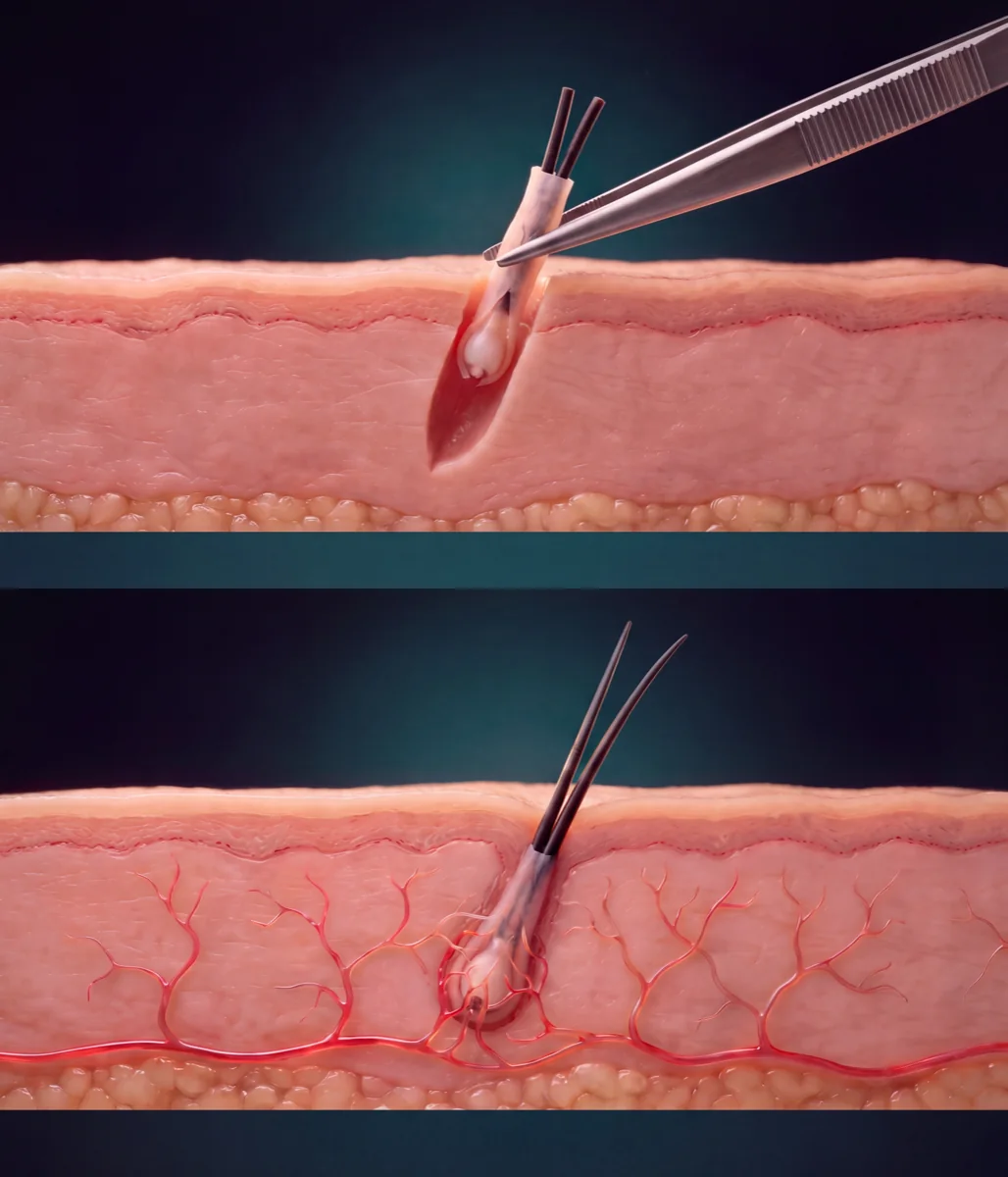
Cross-section of the scalp: above, a follicular unit with two short hairs being placed into a channel with forceps; below, the same follicle months later, fed by a network of capillaries The moment of implantation Months later, connected

FUE Hair Transplant: Sapphire-Tip Precision in Tampa

Every FUE at our clinic starts with a proper diagnosis and a hairline designed for your face, angle, direction and density, drawn before a single graft is placed.

Last updated August 2026

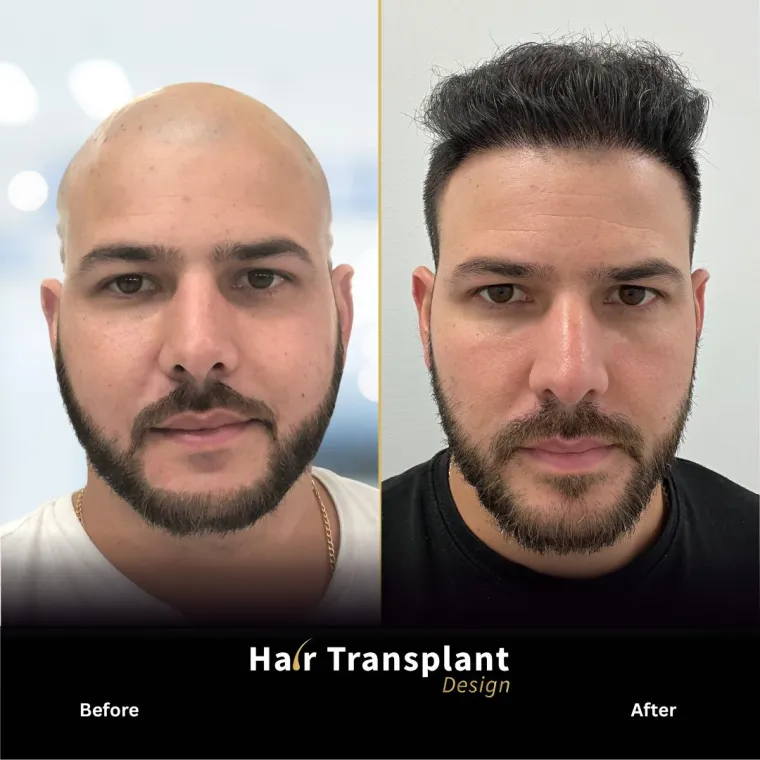
Real FUE Results, Real Tampa Patients

Before and after photographs from procedures performed at our clinic.

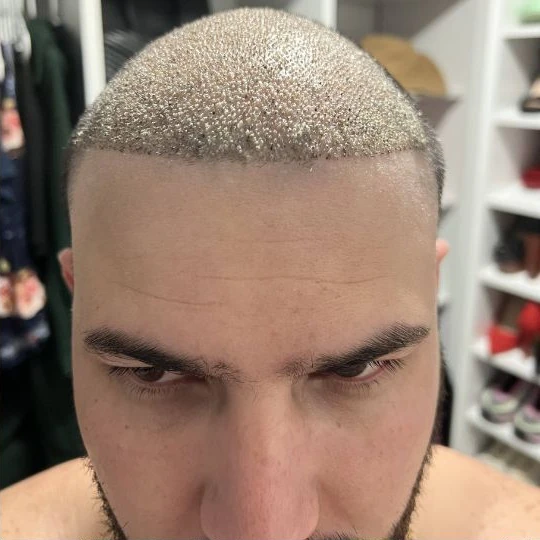
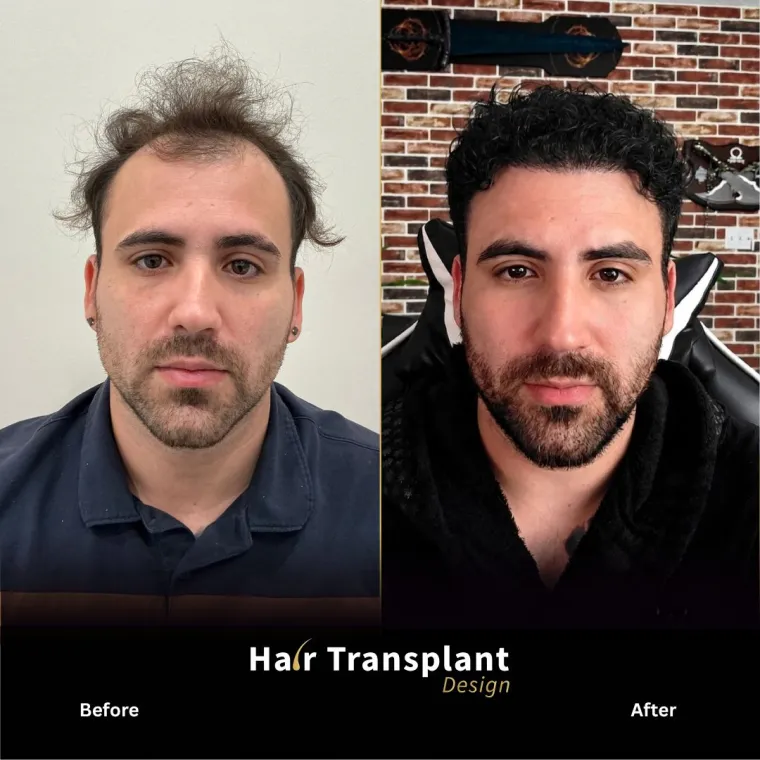
Super full hair restoration, before and after, Hair Transplant Design TampaBefore & After
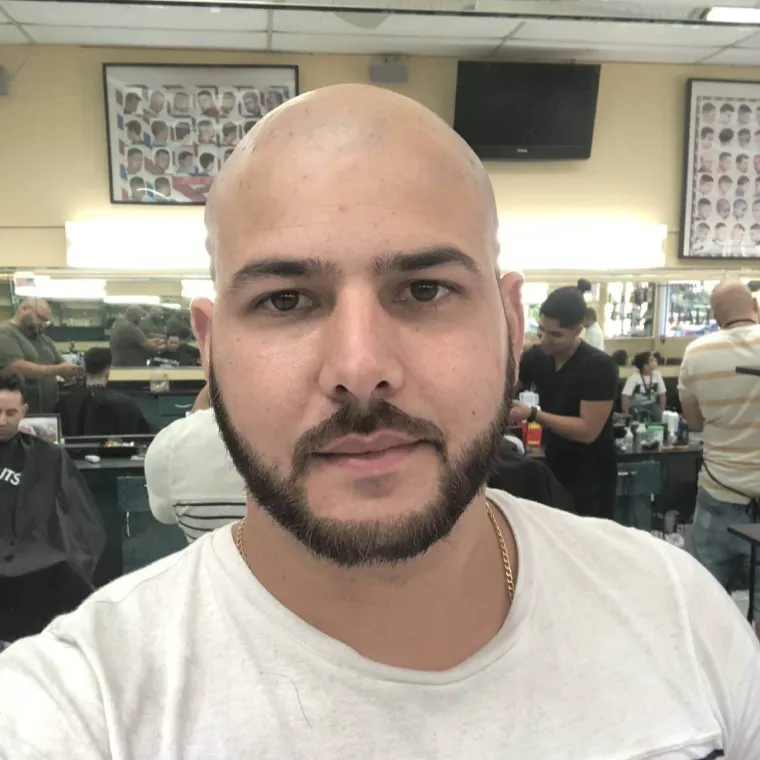
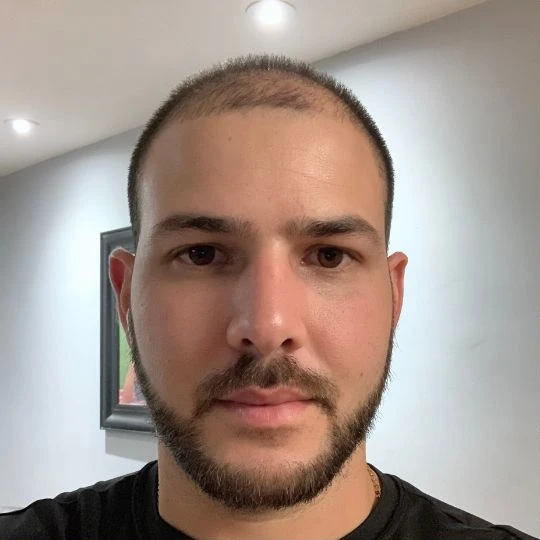
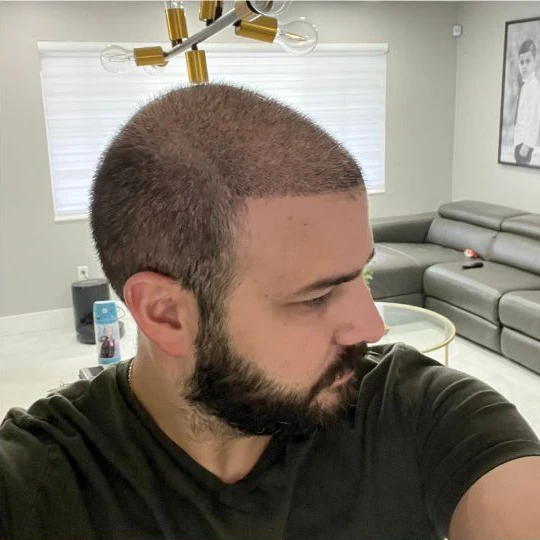
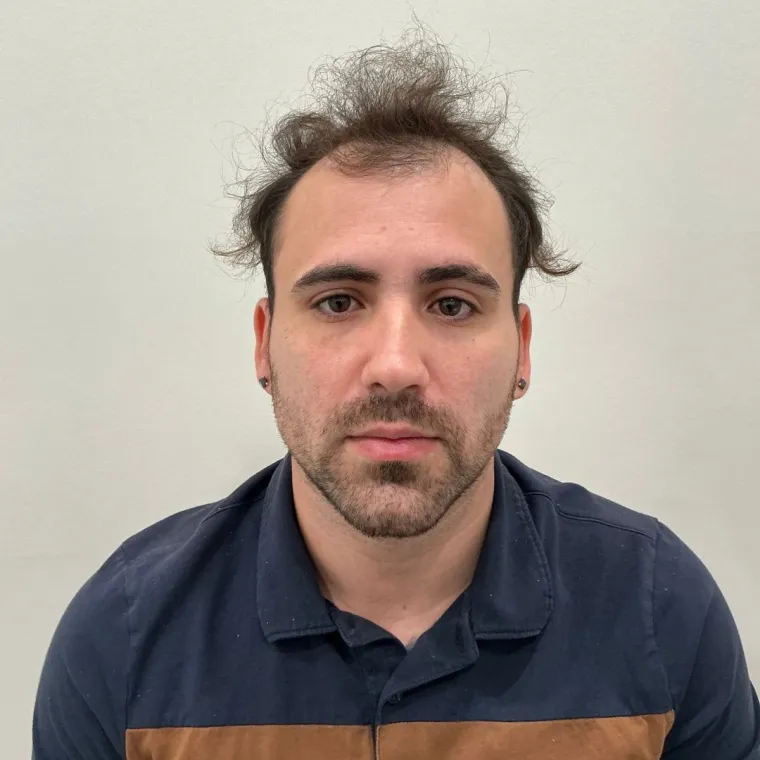
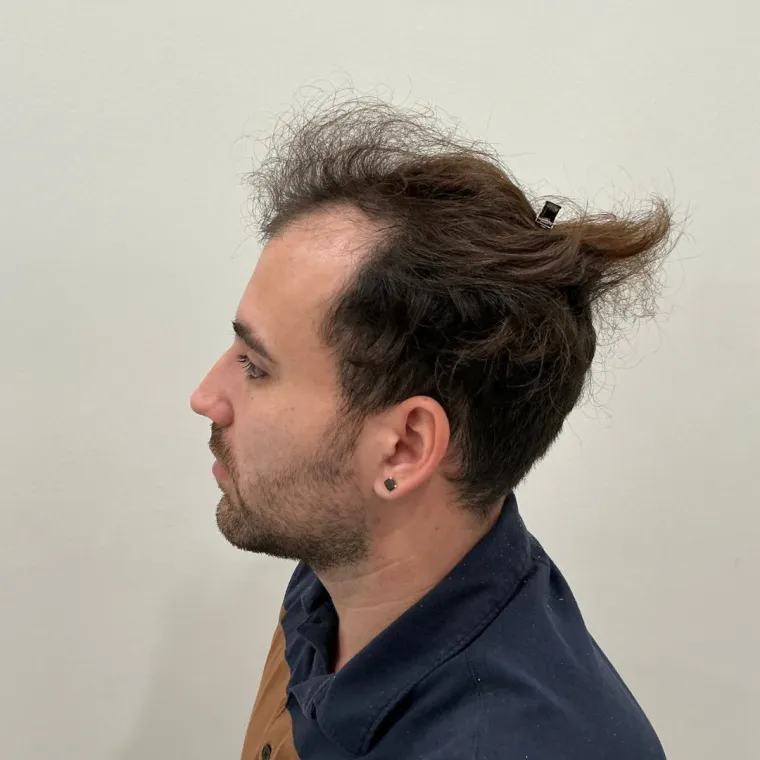
Super full hair restoration, before, Hair Transplant Design TampaBefore
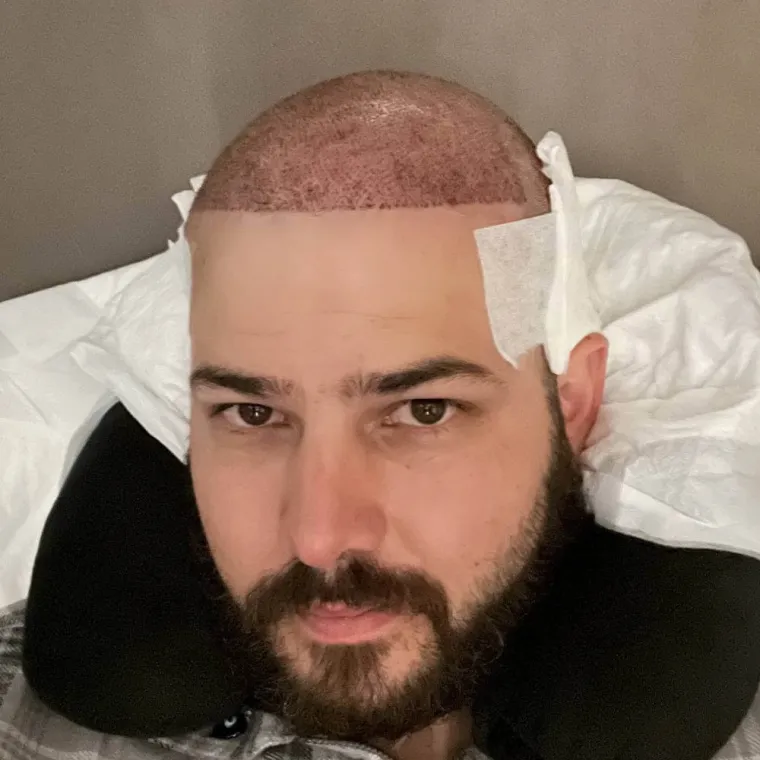
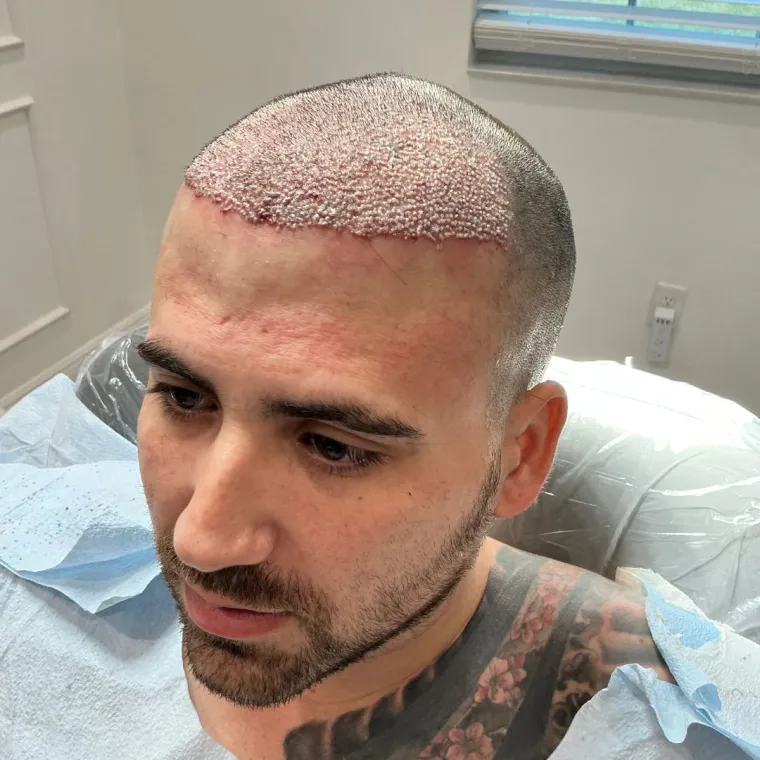
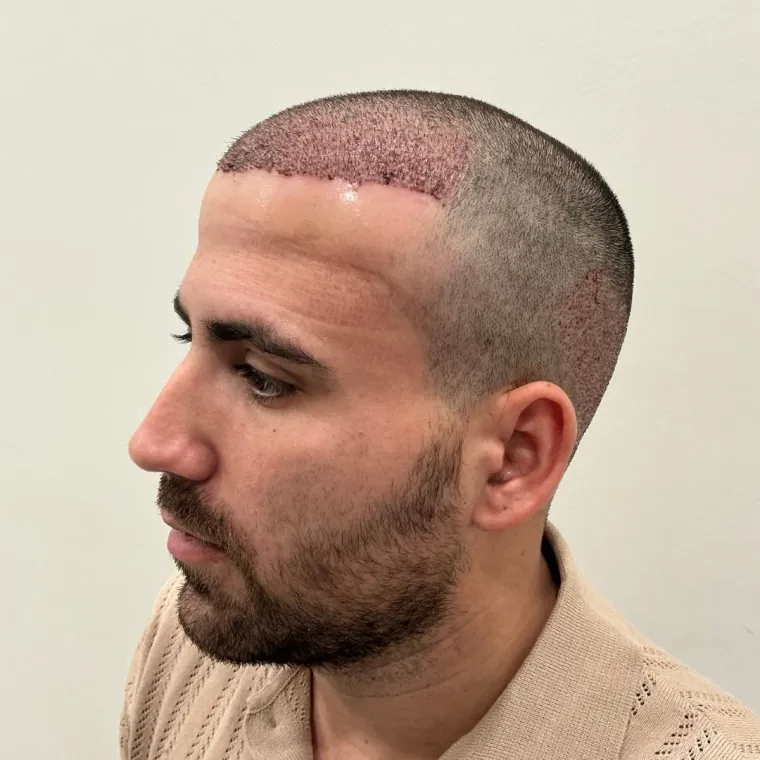
Super full hair restoration, the day of surgery, Hair Transplant Design TampaDay of Surgery
Super full hair restoration, the day of surgery, recipient area, Hair Transplant Design TampaDay of Surgery
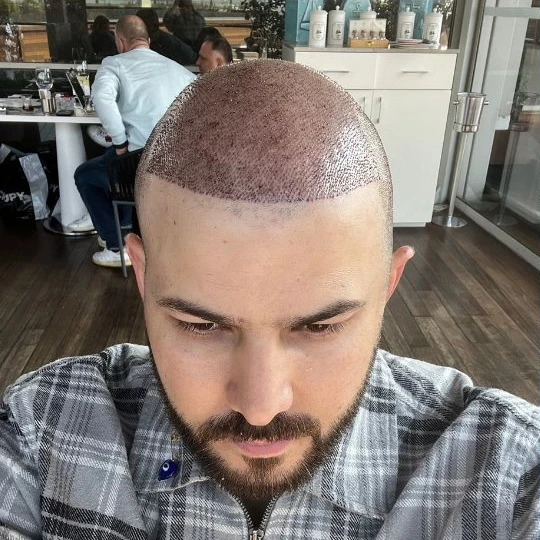
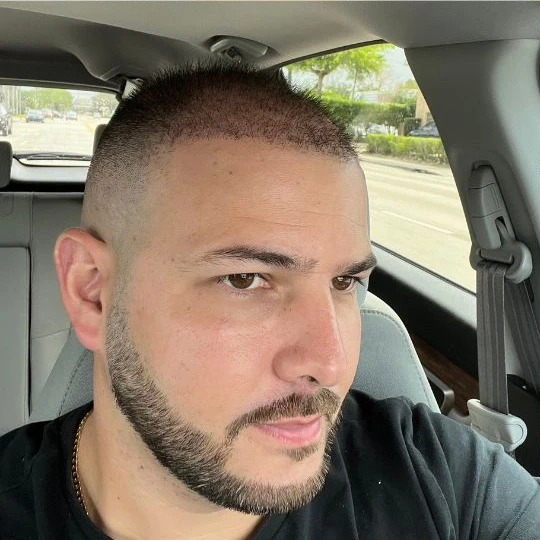
Super full hair restoration, the first days, healing, Hair Transplant Design TampaThe First Days
Super full hair restoration, the first days, front, Hair Transplant Design TampaThe First Days
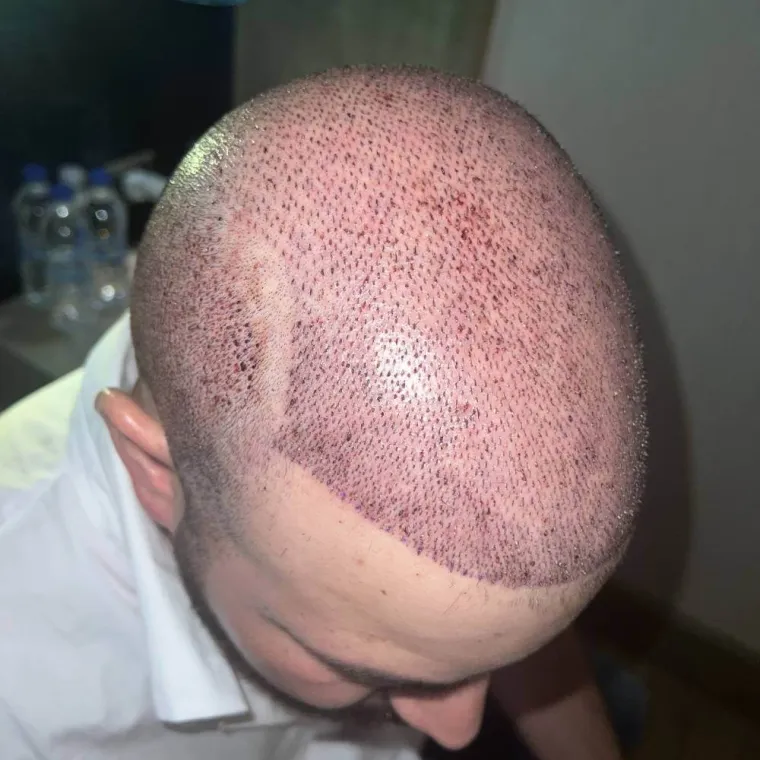
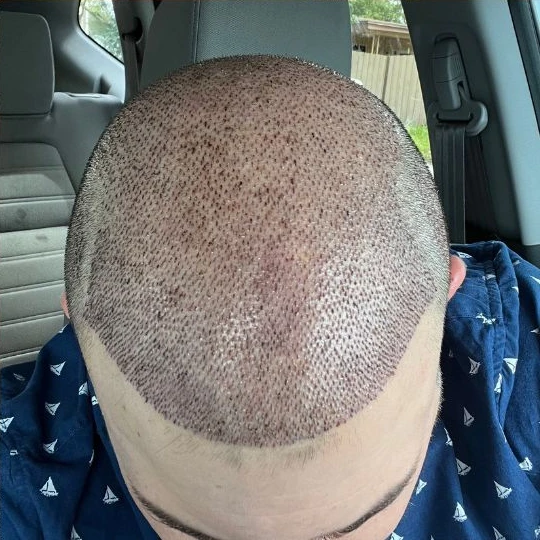
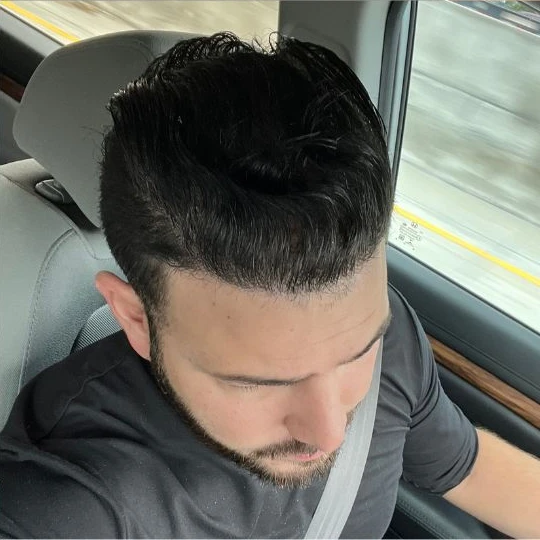
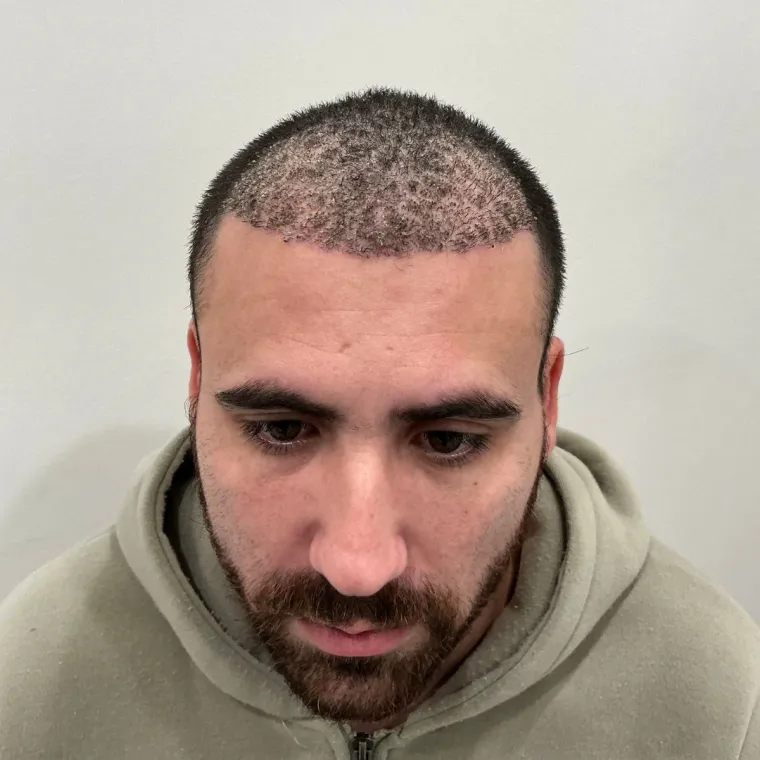
Super full hair restoration, the first days, from above, Hair Transplant Design TampaThe First Days
Super full hair restoration, the first days, settling in, Hair Transplant Design TampaThe First Days
Super full hair restoration, growing in, front, Hair Transplant Design TampaGrowing In
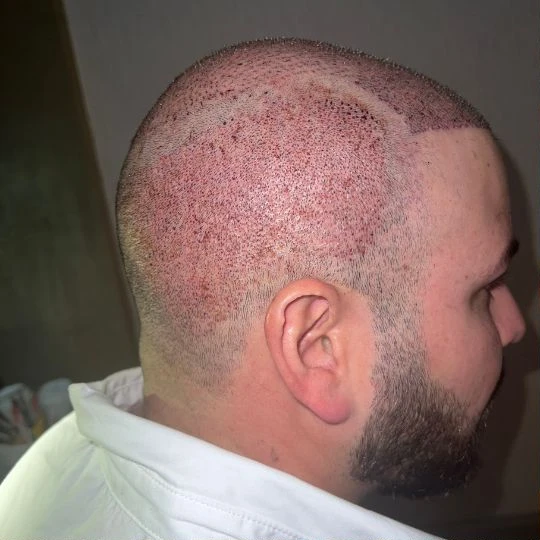
Super full hair restoration, growing in, profile, Hair Transplant Design TampaGrowing In
Super full hair restoration, growing in, filling out, Hair Transplant Design TampaGrowing In
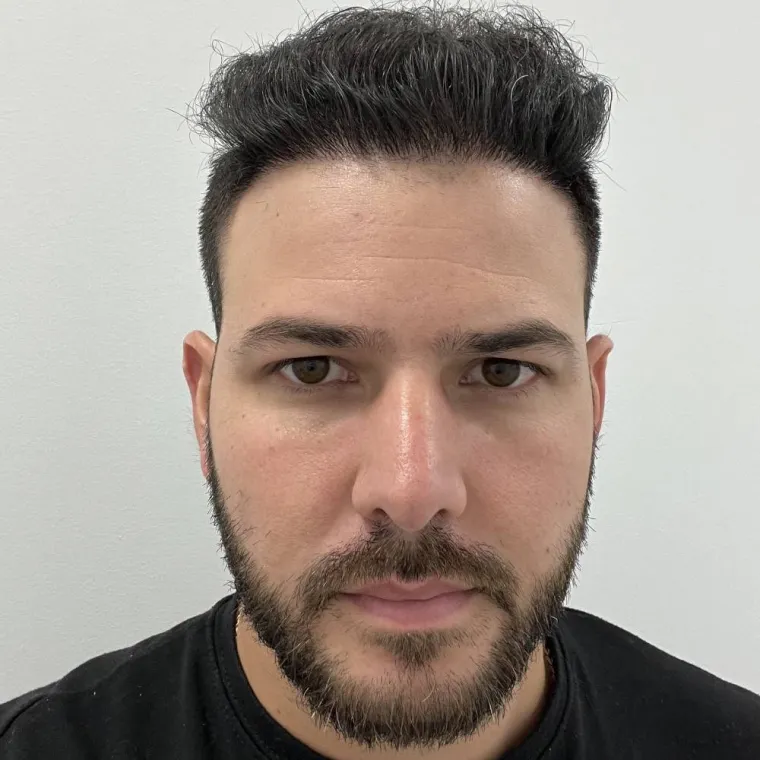
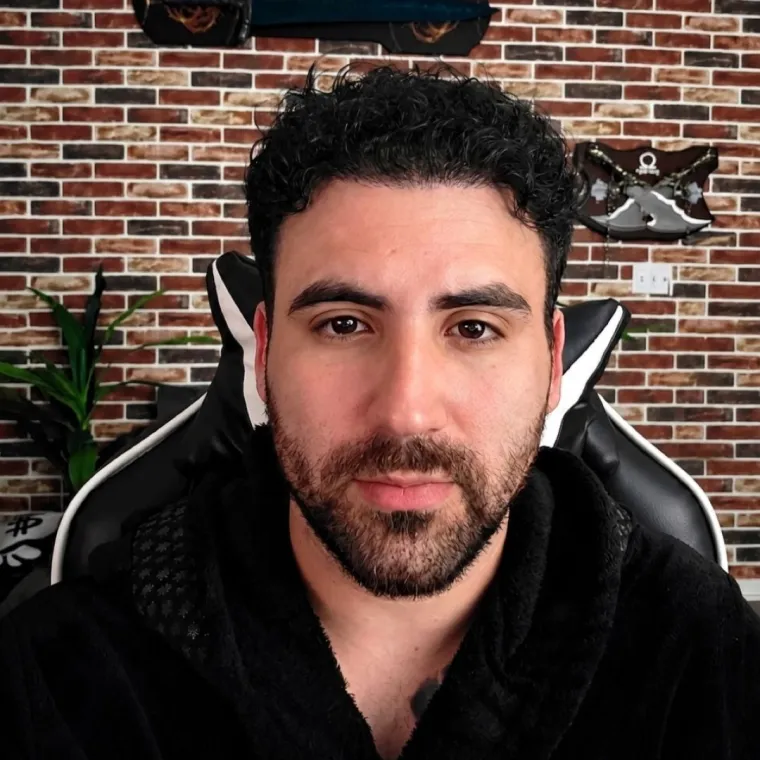
Super full hair restoration, after, styled, Hair Transplant Design TampaAfter
Super full hair restoration, after, front view, Hair Transplant Design TampaAfter
Super full hair restoration, after, profile, Hair Transplant Design TampaAfter
Super full hair restoration, after, everyday, Hair Transplant Design TampaAfter
Super full hair restoration, after, on the road, Hair Transplant Design TampaAfter

1 / 16

Super Full Restoration5,500 grafts · Before and after
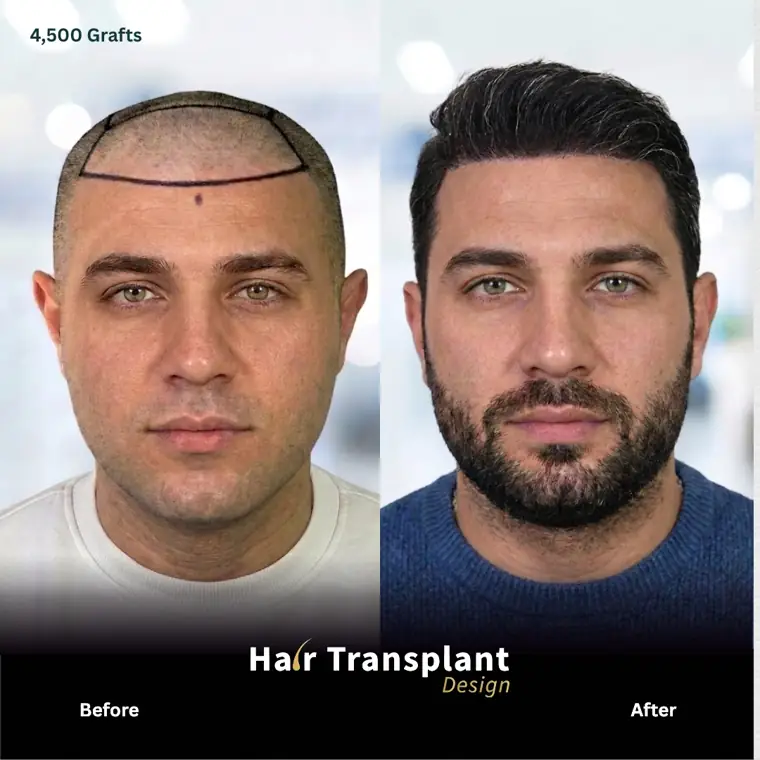
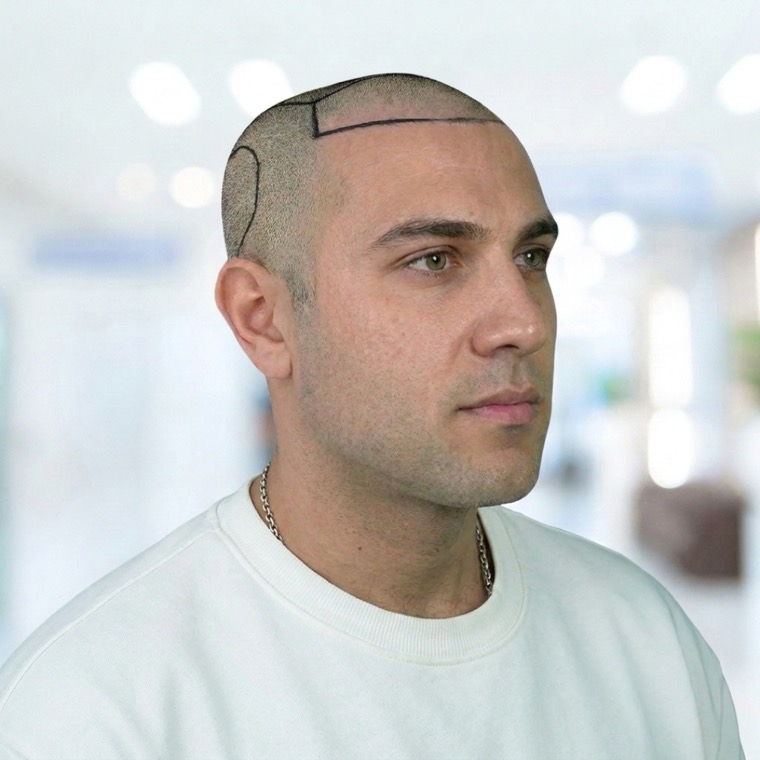
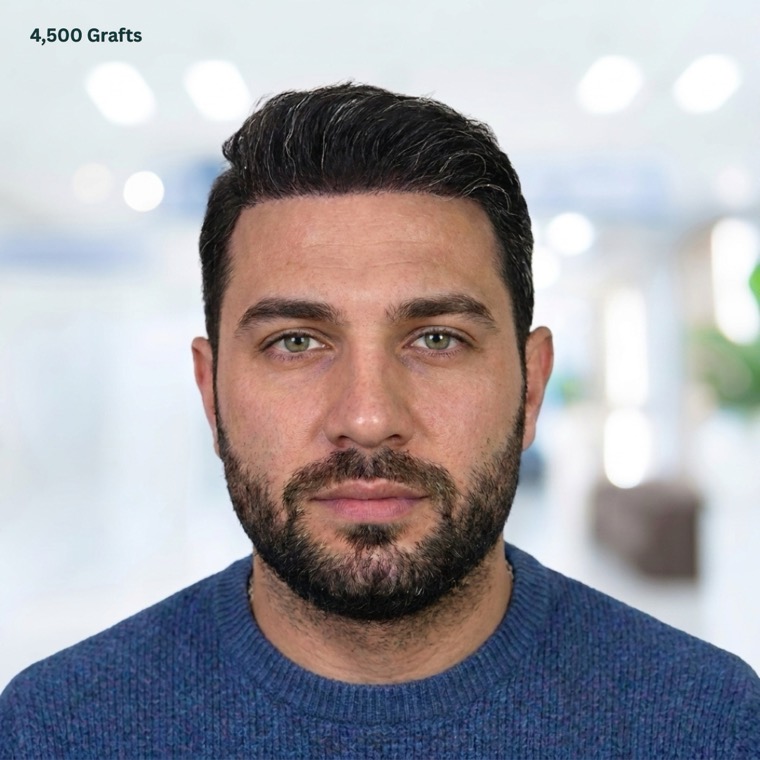
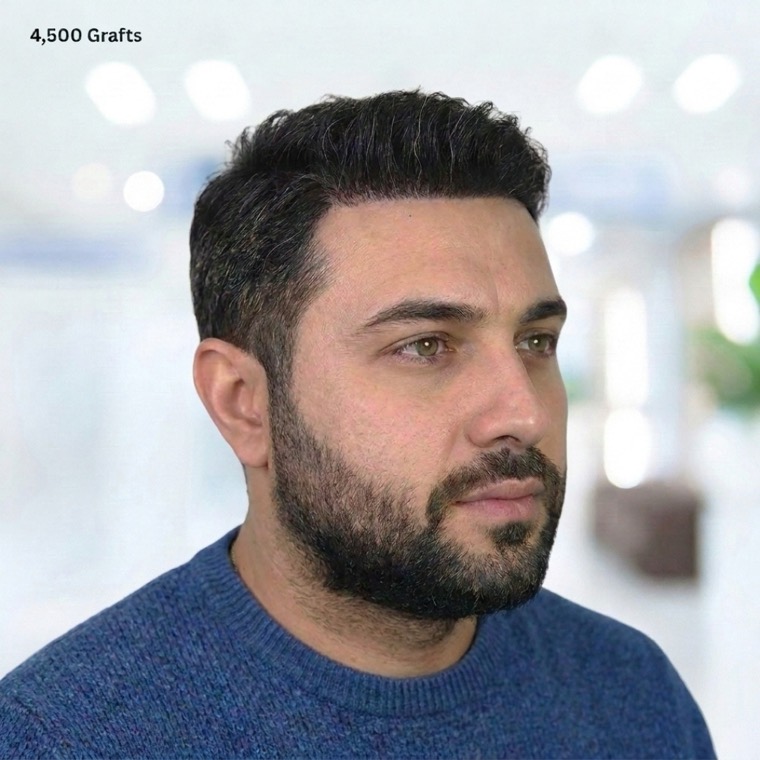
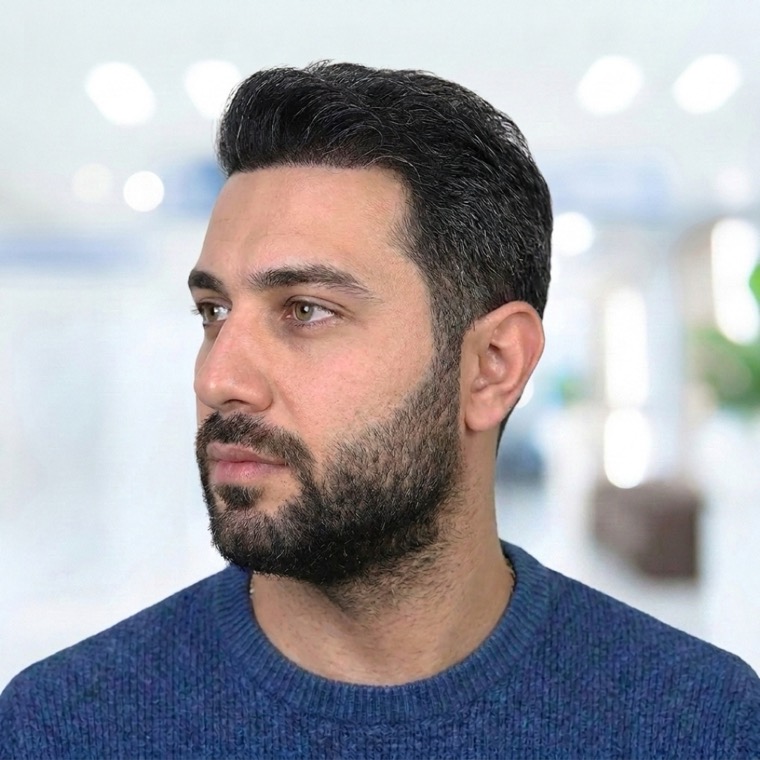
Full Frontal Restoration, before and afterBefore & After
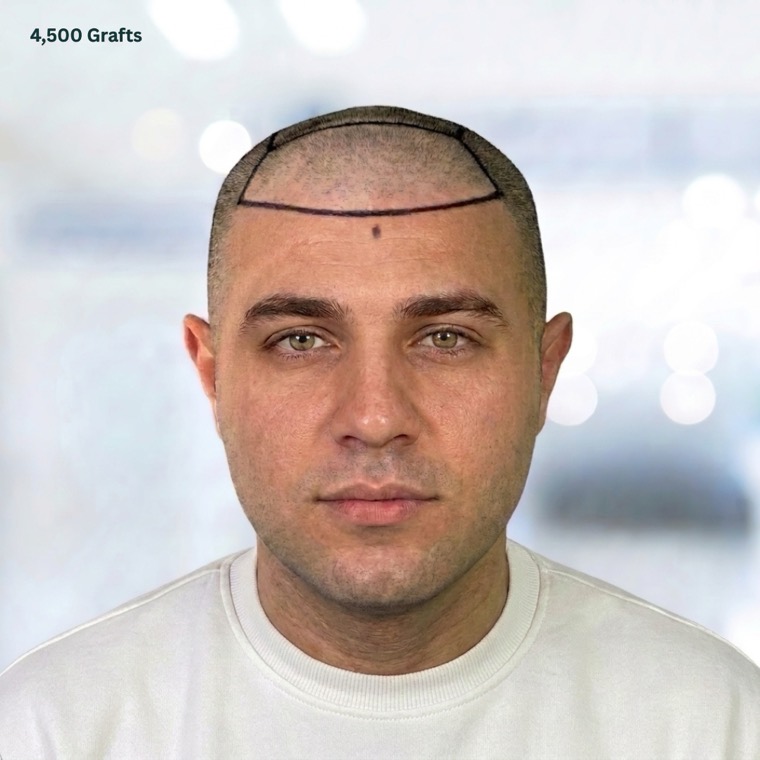
Full Frontal Restoration, before, front viewBefore
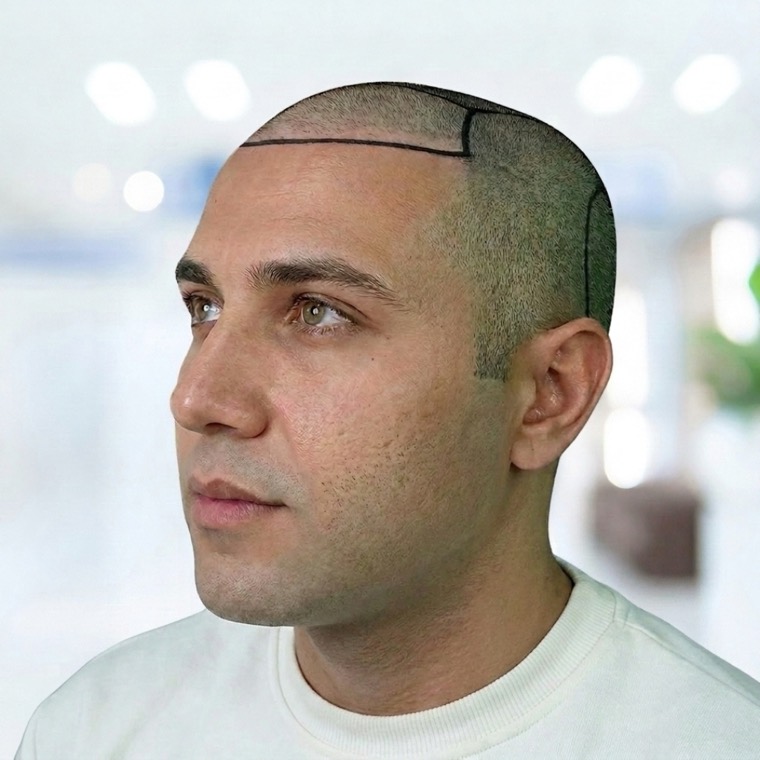
Full Frontal Restoration, before, three-quarter viewBefore
Full Frontal Restoration, before, the opposite sideBefore
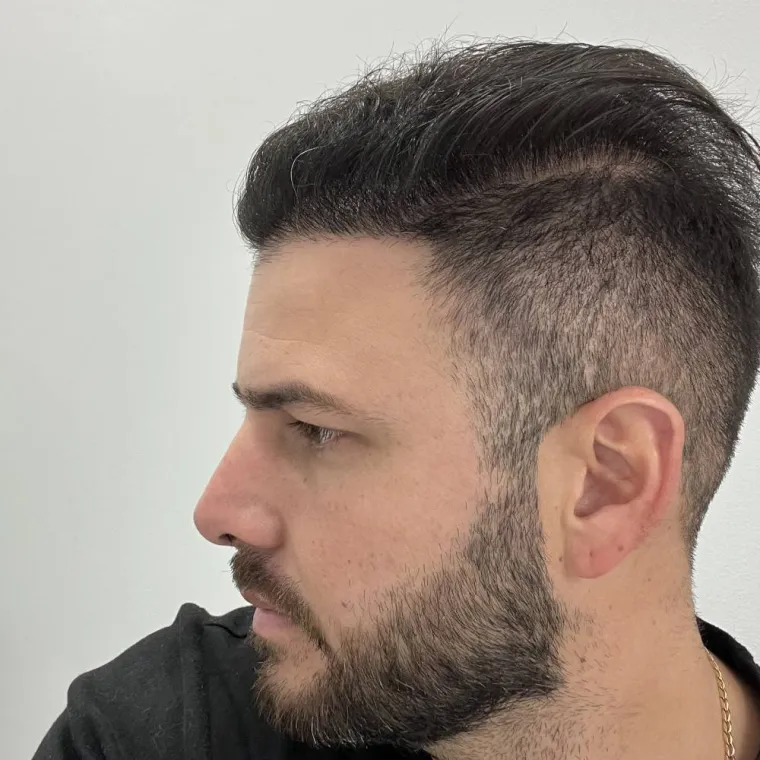
Full Frontal Restoration, after, front viewAfter
Full Frontal Restoration, after, three-quarter viewAfter
Full Frontal Restoration, after, the opposite sideAfter
Full Frontal Restoration4,500 grafts · Before and after
Front and mid-scalp restoration, before and after, Hair Transplant Design TampaBefore & After
Front and mid-scalp restoration, before, front view, Hair Transplant Design TampaBefore
Front and mid-scalp restoration, before, profile, Hair Transplant Design TampaBefore
Front and mid-scalp restoration, the day of surgery, Hair Transplant Design TampaDay of Surgery
Front and mid-scalp restoration, the day of surgery, profile, Hair Transplant Design TampaDay of Surgery
Front and mid-scalp restoration, the first days, healing, Hair Transplant Design TampaThe First Days
Front and mid-scalp restoration, after, front view, Hair Transplant Design TampaAfter
Front & Mid-Scalp4,000 grafts · Before and after

What Is FUE?

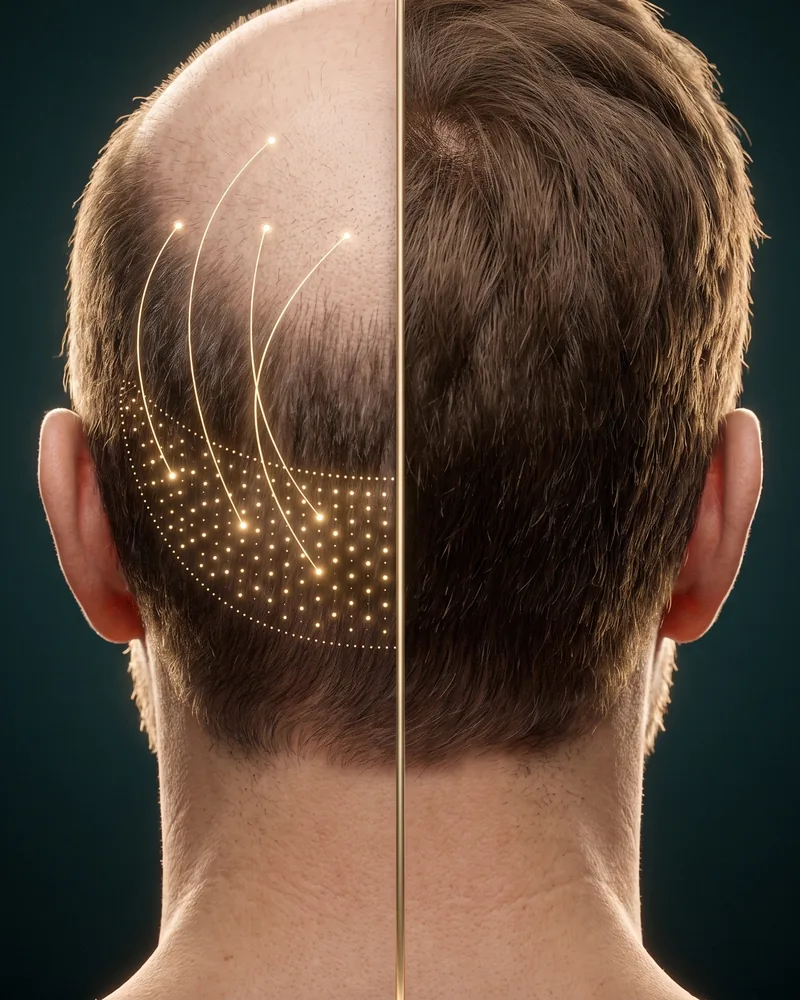
The back of a man's head: on one side the donor area marked with the follicular units to be taken and their path up to the thinning crown, on the other the same head with full hair
Follicles come from the permanent donor area at the back, spaced so the area keeps its density.

FUE (Follicular Unit Extraction) moves your hair one follicular unit at a time: extracted from the permanent donor area with a micro-punch, then implanted through channels opened with sapphire-tip blades. No strip of scalp removed, no linear scar, and a recovery measured in days, not weeks.

FUE vs FUT: What Actually Differs

Both move your own hair. The difference is how it leaves the donor area, and what that leaves behind.
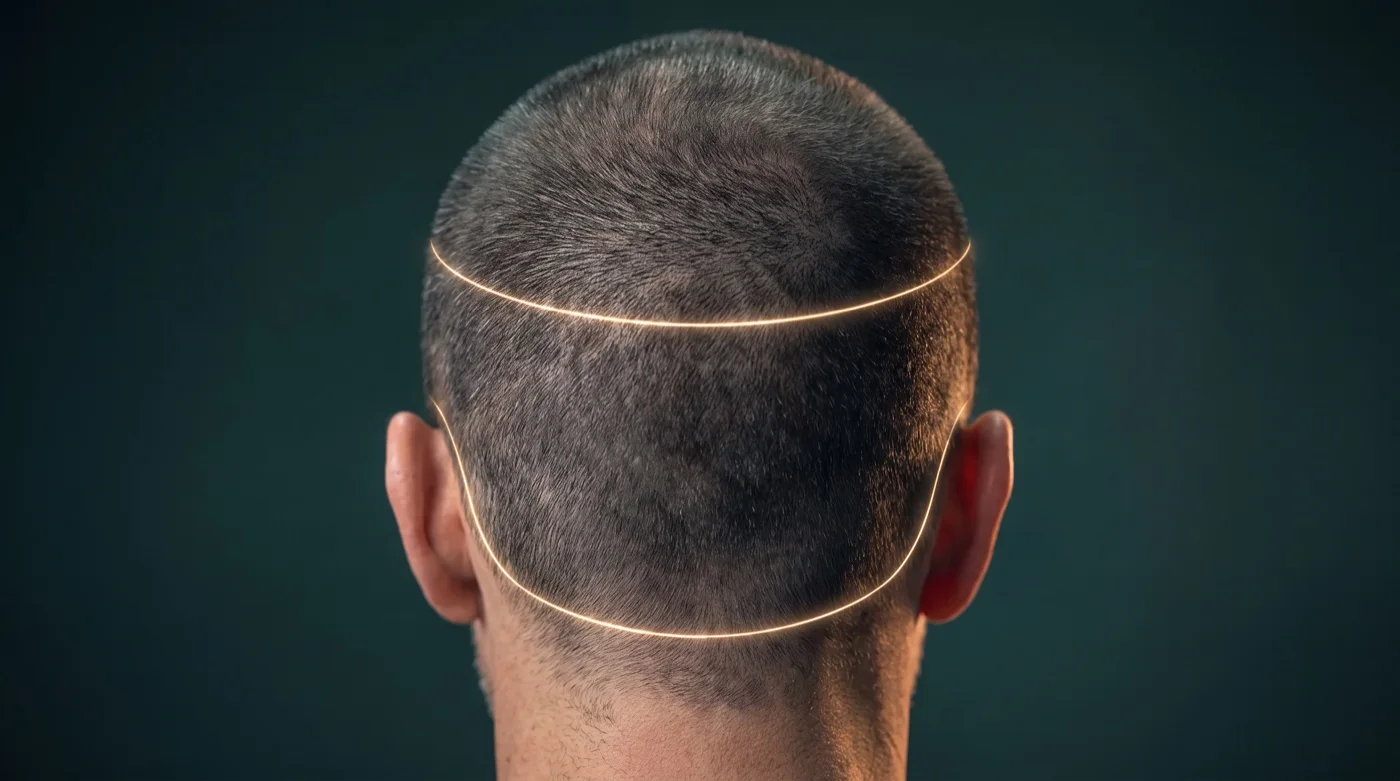
FUE · what we do Illustration of the back of a head with the donor zone outlined in gold: the dense band of hair the FUE grafts come from One follicular unit at a time, spread across the donor zone
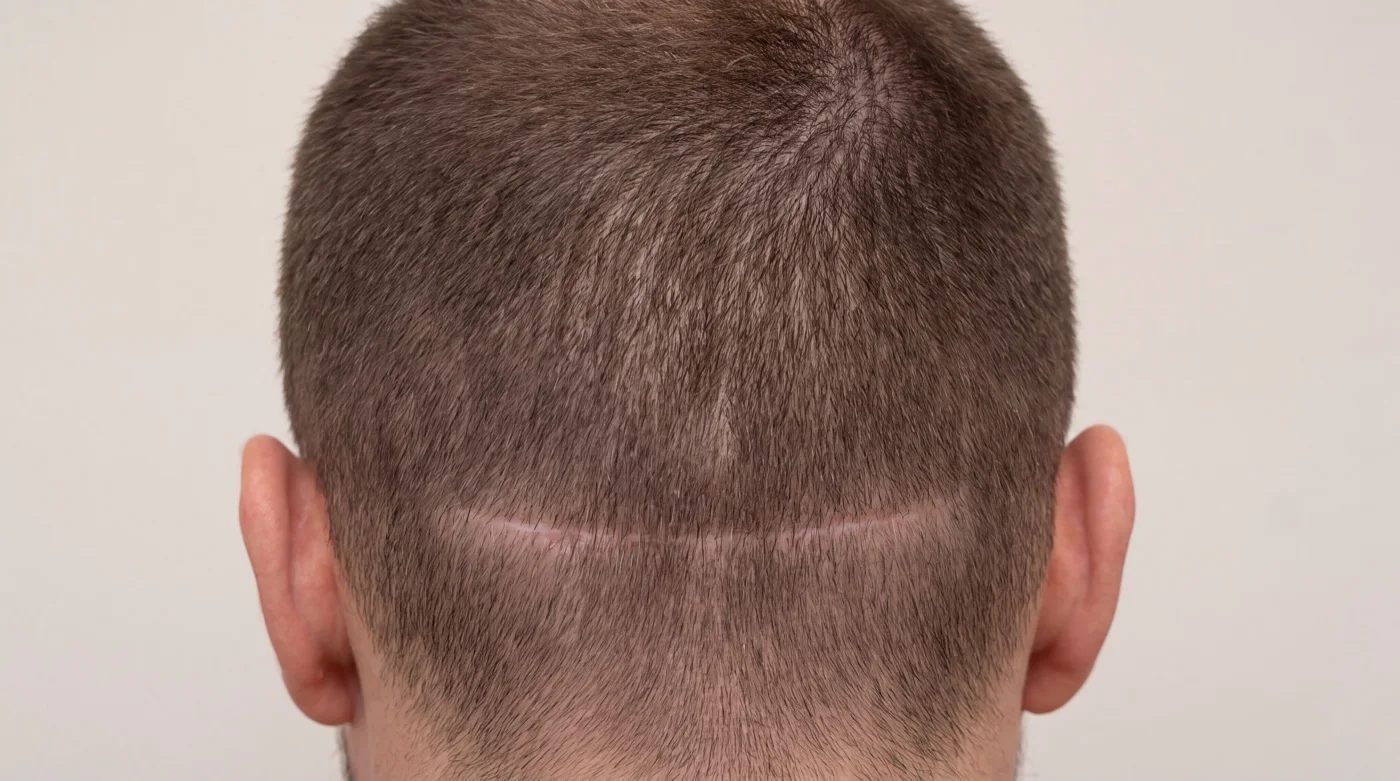
FUT · strip Medical illustration: the healed linear donor scar left by the FUT strip technique, seen under short hair A strip of scalp, later stitched closed
Donor scar
Tiny dots that fade under short hair
One linear scar across the back
Share of practice
75% of male cases among ISHRS members
21% of male cases
Large plans
One session or split, as your plan needs
Limited by how much strip can be taken

Share of practice: ISHRS member survey, self-reported 2021 case mix. Graft survival between the two is not settled by comparative studies, so we do not claim one grows better.

How FUE Works, Step by Step

One real patient, photographed at each stage of the same journey at our clinic.
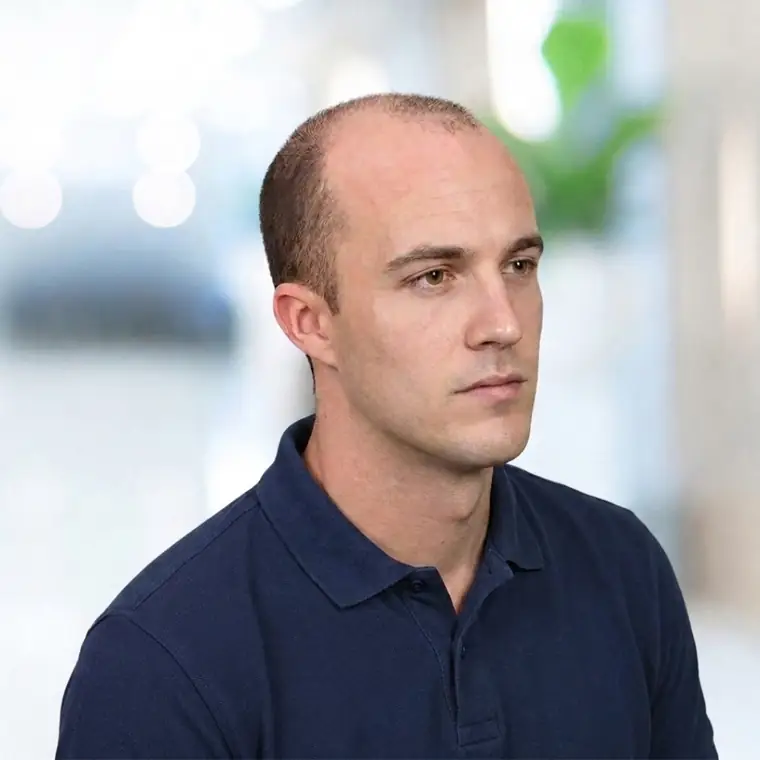
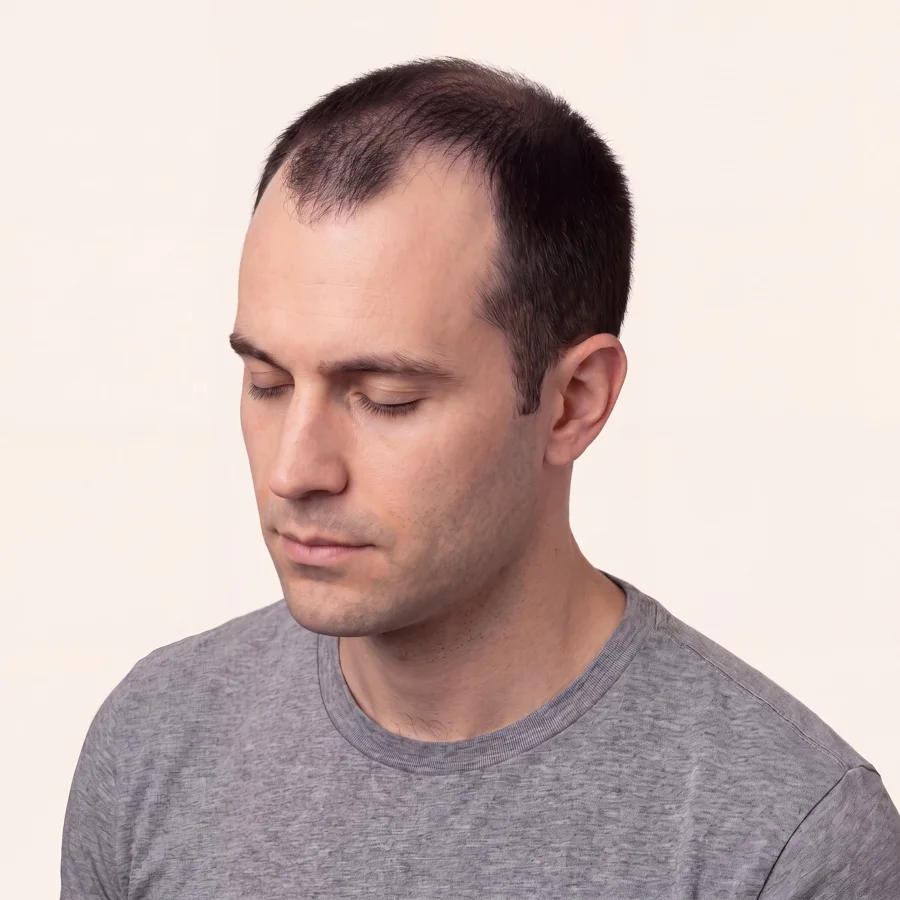
Patient before his FUE hair transplant, receding hairline visible

Diagnosis

We map your hair loss pattern and measure your donor area.
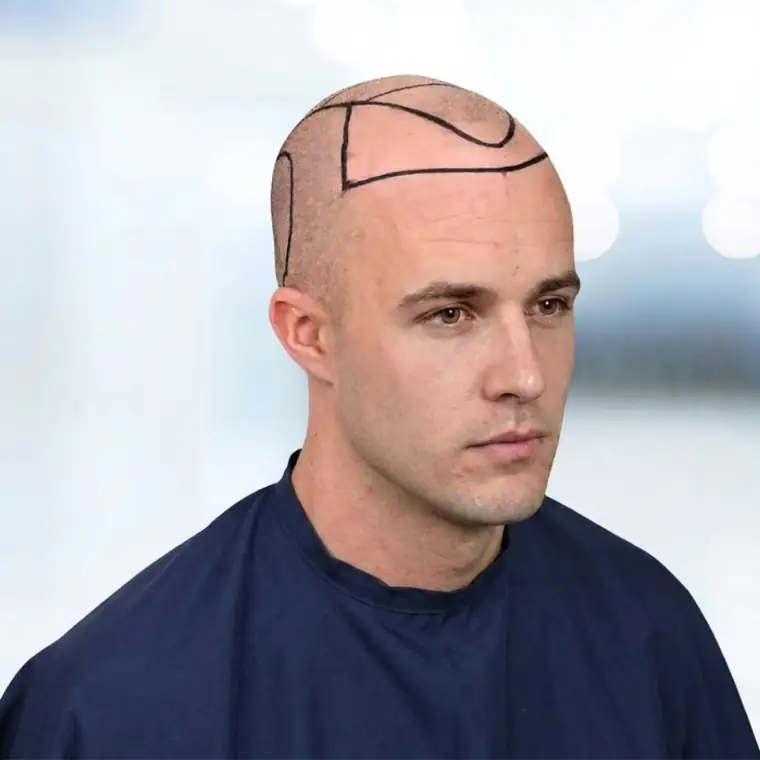
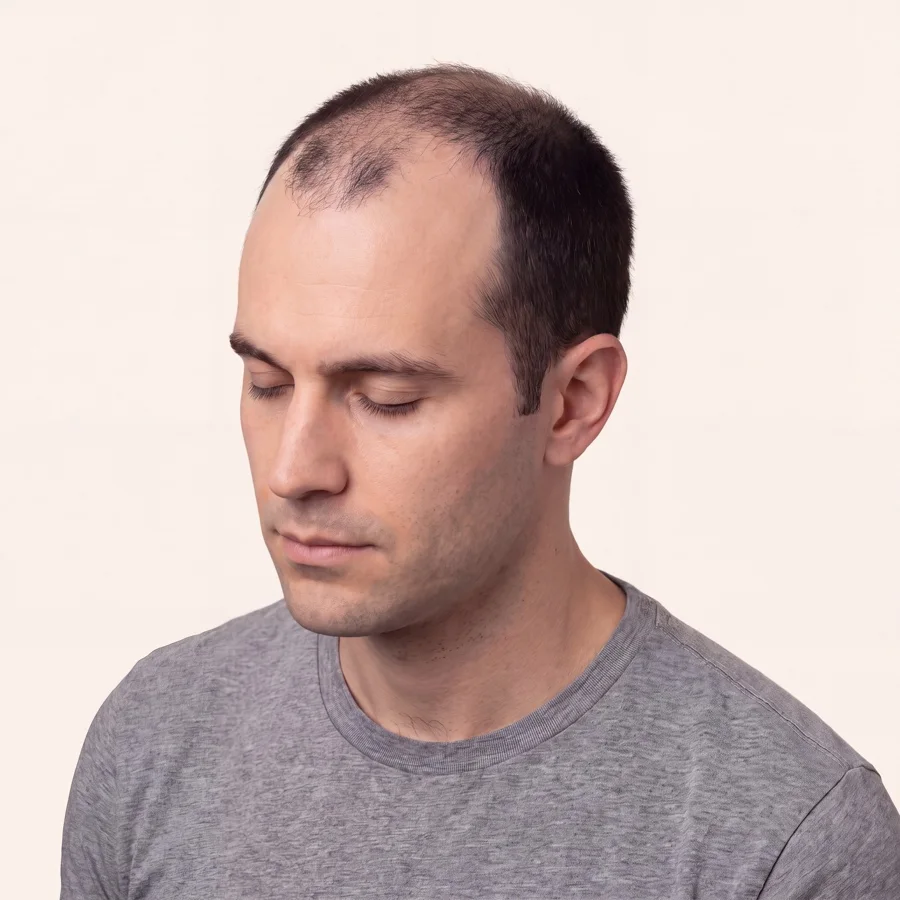
Surgical hairline design drawn on the patient before FUE extraction

Design

Your new hairline is drawn for your face: angle, direction and density decided before surgery.
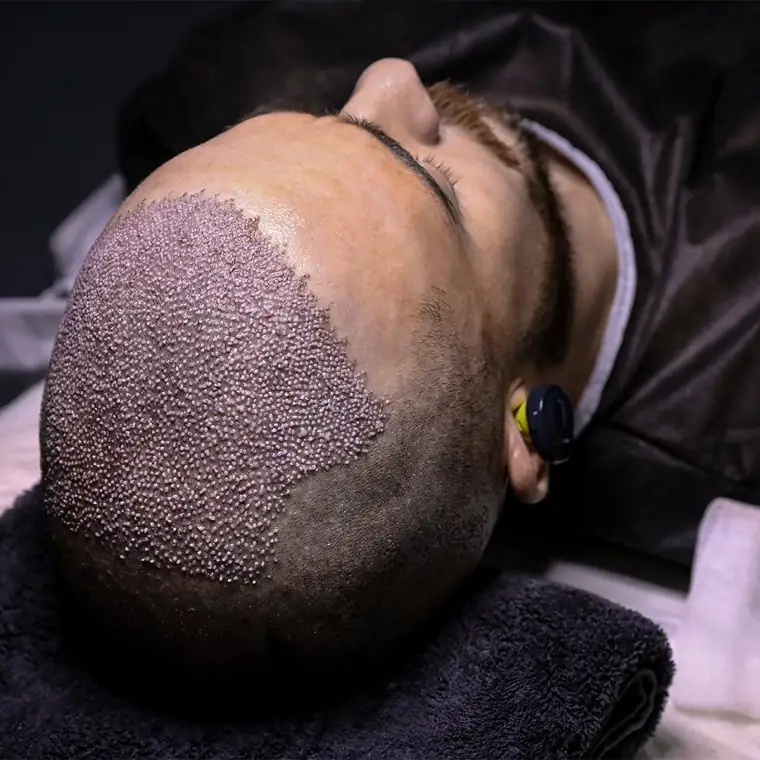
Freshly implanted FUE grafts covering the designed zone

Extraction & implantation

Units are extracted one by one and placed into sapphire-cut channels inside the design.
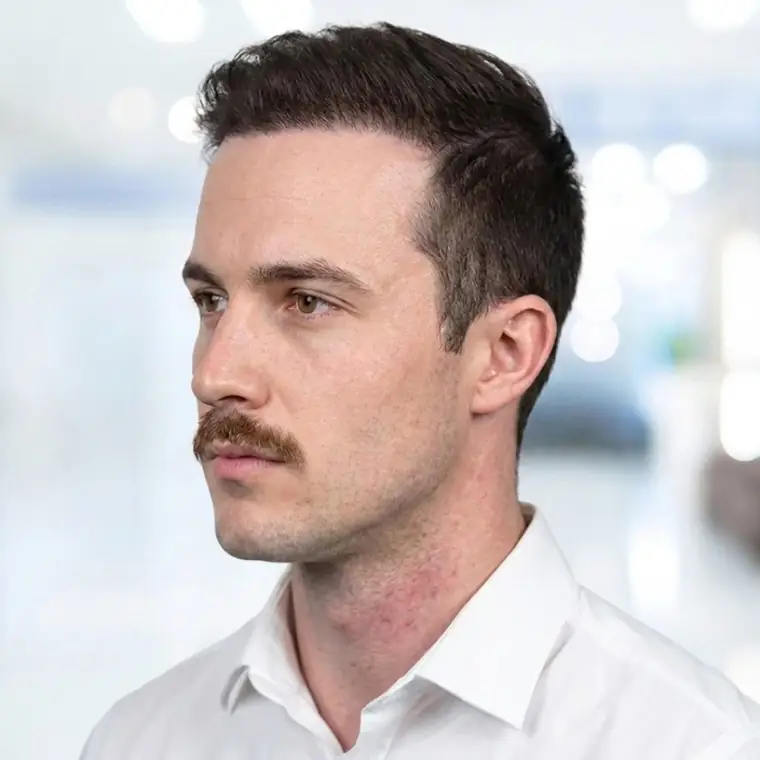
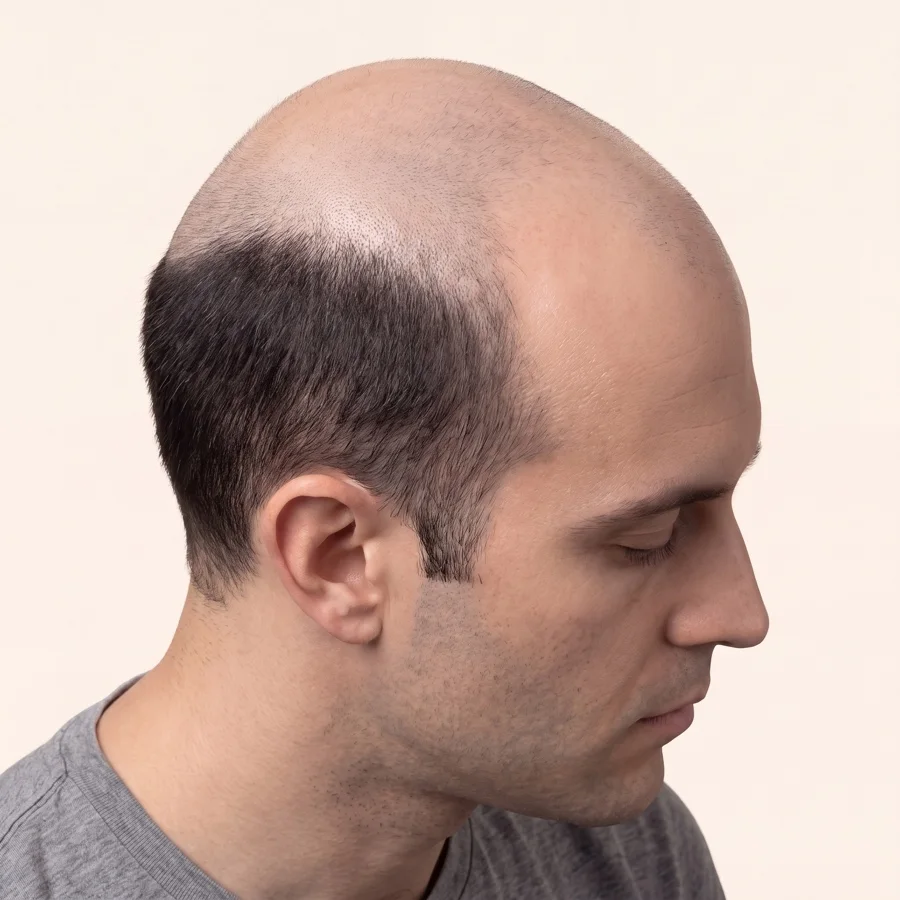
The same patient months after FUE with full natural hair growth

Growth

PRP supports recovery, and our supervision follows your hair for five years. See how we protect the rest of your hair.

Why “Design” Is in Our Name

The Hairline Is Designed Before It Is Transplanted

Grafts alone do not make a transplant look natural. Where the line sits, which way each hair points and which follicle goes where do. We decide all three with you, in the mirror, before the first channel is opened.
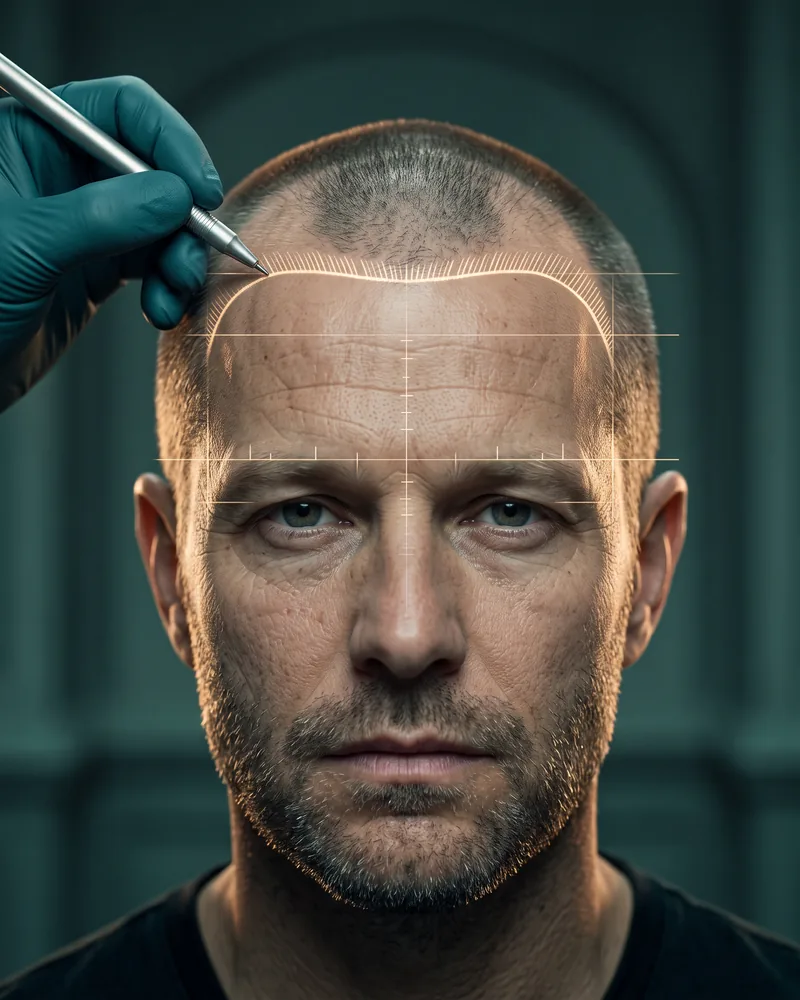
Illustration: a gloved hand draws a new hairline in gold on a man with receding temples, with facial proportion guides over his face
Illustration. The real design photos are in the cases above.

The Line: Drawn for Your Face, Not From a Template

Two hairlines can use the same grafts and look nothing alike. Yours starts from your forehead and temples, then adjusts to your age and to where your loss is heading.
  • Height. About 7 to 10 cm above the point between your eyebrows, higher when the loss is advanced. Too low never looks natural.
  • Shape. The center is the lowest point and the corners recede into the temples. Filling the corners flat is what gives a transplant away.
  • Edge. The border feathers because of what is in it: single-hair units, set staggered, one a little ahead, one a little behind.
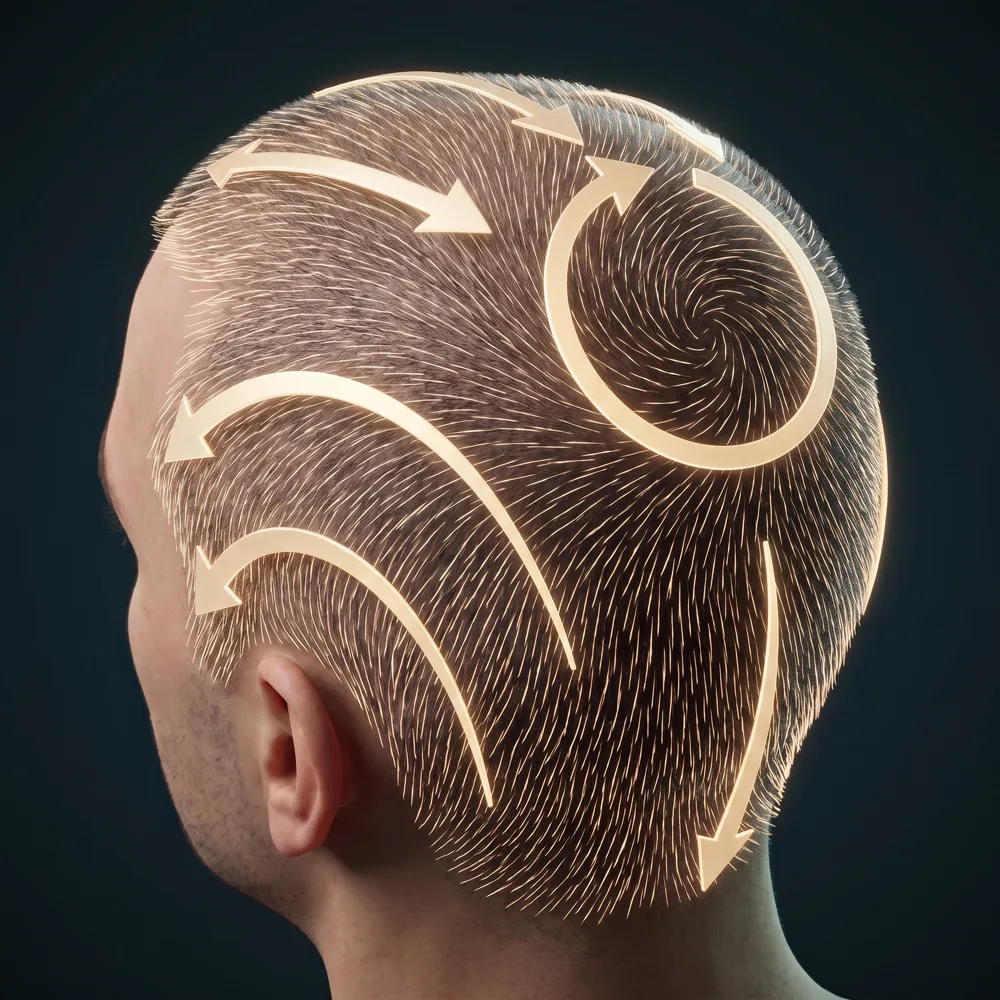
Illustration: a buzzed head seen from behind and above, covered in short gold strokes that show the direction hair grows in each region, with a whorl at the crown

Direction and Angle: The Channel Decides How the Hair Lies

Angle is how much a hair lifts from the skin. Direction is where it points. The channel fixes both, and neither can be styled away later.

ZoneAngle and direction
Frontal hairline15–20°, pointing forward
Frontotemporal corner10–15°, turning from forward to down and outward
Temples5–10°, almost flat, toward the ear
Mid-scalp30–45°, pointing toward the nose
CrownFollows your own whorl

Exit angles per Shapiro & Shapiro, 2013. No hair is placed perpendicular to the scalp.
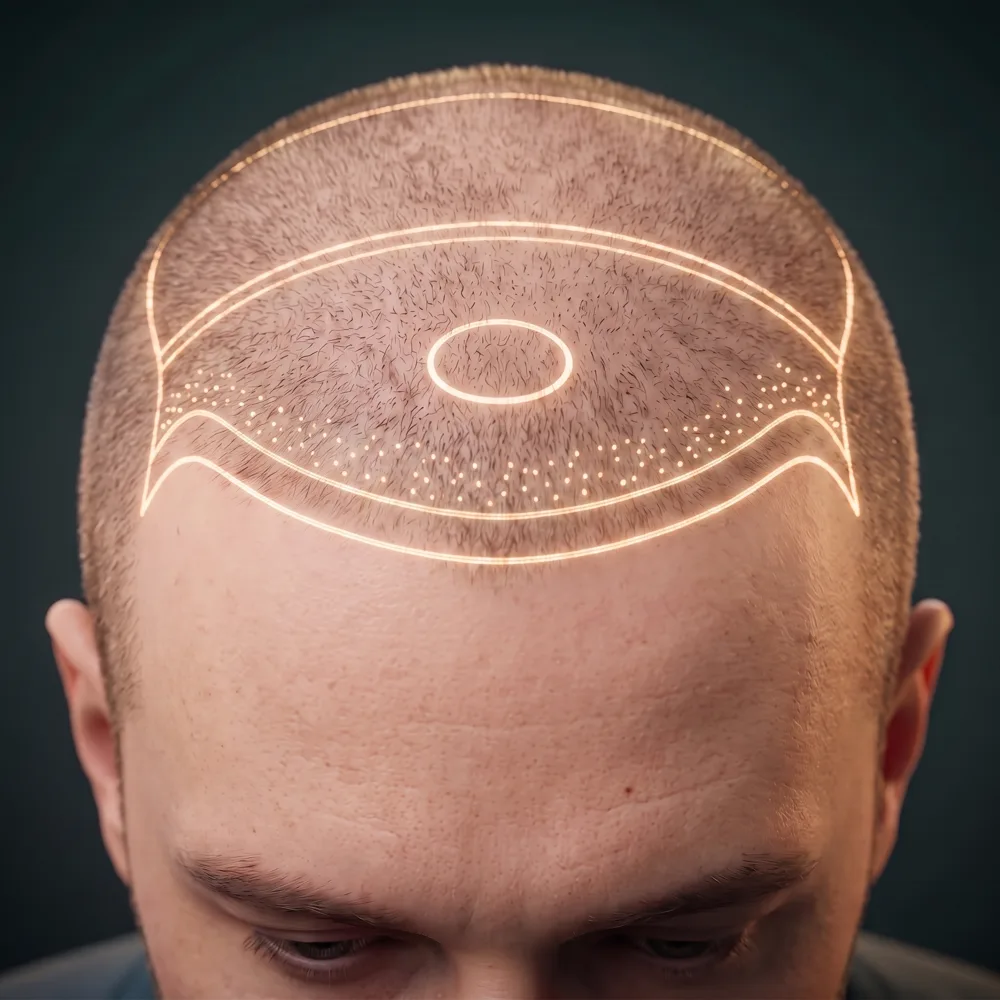
Illustration: the frontal hairline seen from above as a smooth gold curve with staggered single-hair dots along its edge, a wider band behind it and a small oval at the center

The Right Follicle in the Right Place

Follicular units carry one, two or three hairs. Where each kind goes keeps the front soft and the back full.

  • Transition zone, the first 0.5 to 1 cm. Single-hair units only, the finest at the edge, staggered rather than in a row.
  • Defined zone, the 2 to 3 cm behind it. Mostly two-hair units. Here the hairline gains substance.
  • Frontal tuft, the central oval. Three-hair units, concentrated where people look at you straight on.

Not Everyone Wants the Same Hairline

Before we draw, we weigh with you:

  • Your age and how your loss will likely progress
  • How your forehead and the line frame your face
  • How much donor hair you can spend, now and later
  • What you want: a softer mature edge or a fuller frame, a widow’s peak or none

The younger you are and the more loss ahead, the more conservative the line. If you ask for one lower than will age well, we tell you and show you why.
Why Sapphire-Tip Blades?

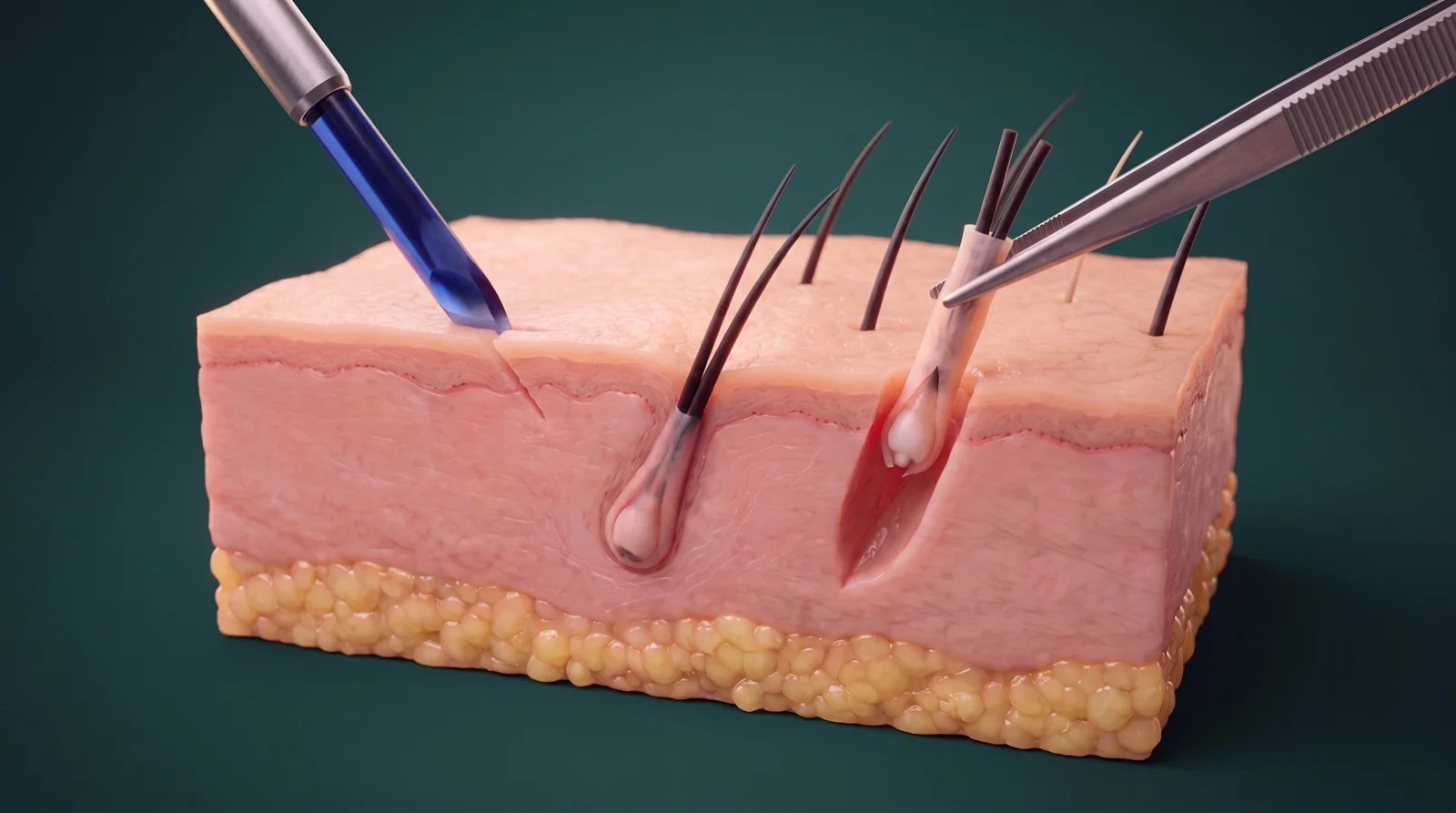
Medical illustration of a scalp cross-section: a sapphire-tip blade opens a fine slit at the angle of the existing hairs, and a follicular unit graft sits in an identical slit beside intact units

A sapphire-tip blade is a synthetic sapphire point used to open the tiny channels each graft is placed into. It is the blade we use on every FUE at the clinic.

Opening the channel

A sapphire point about a millimeter wide opens a fine slit at the angle your hair already grows.

Placing the graft

Each unit goes into a slit that matches its size, with the tissue around the follicle intact.

Whether sapphire outperforms steel has not been settled by comparative studies. We use it for the precision it gives our team, not because we can promise you a number.

How Many Grafts Will You Need?

What we usually plan, by stage of hair loss. Your own number is set at your consultation.
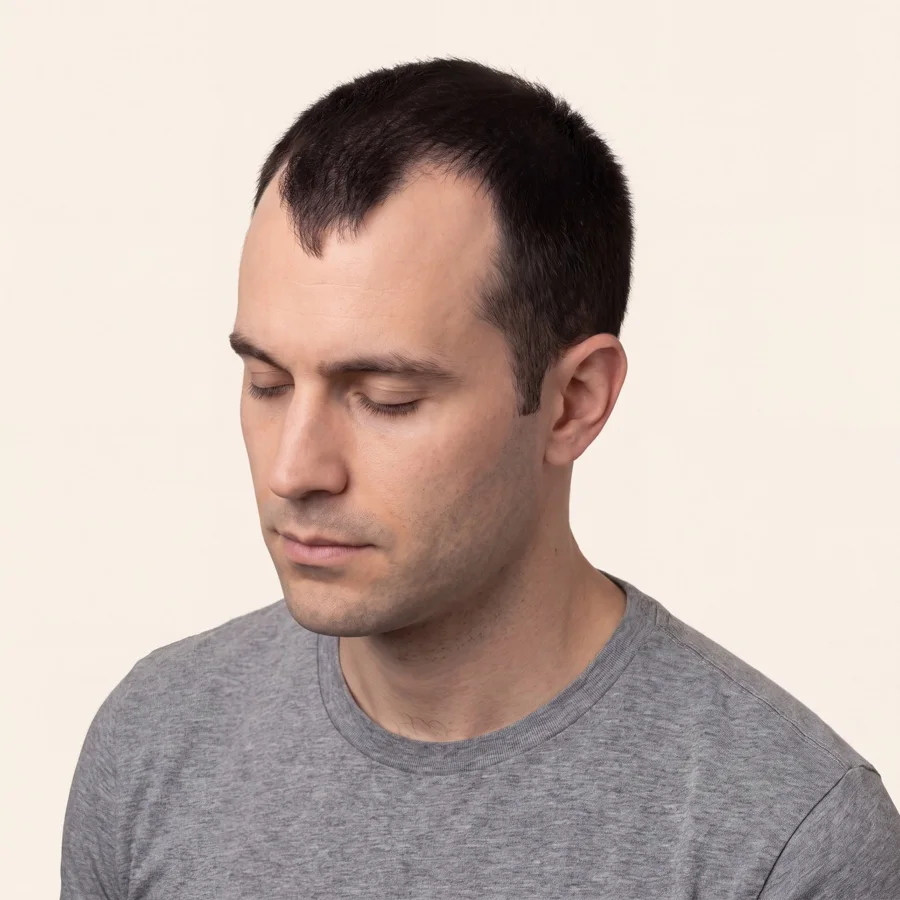
Medical illustration of Norwood stage III male pattern hair loss on the same model, donor hair intact
Norwood IIIReceding temples, hairline only
Medical illustration of Norwood stage IV male pattern hair loss on the same model, donor hair intact
Norwood IVDeeper temples, first thinning at the crown
Medical illustration of Norwood stage V male pattern hair loss on the same model, donor hair intact
Norwood VThe band between front and crown narrows
Medical illustration of Norwood stage VI male pattern hair loss on the same model, donor hair intact
Norwood VIFront and crown merge into one area
Medical illustration of Norwood stage VII male pattern hair loss on the same model, seen from the side so the dense donor band above the ear and around the back stays visible
Norwood VIIOnly the horseshoe of donor hair remains

For receding temples we usually plan 2,500 to 3,000 grafts, and the number rises with each stage. Our largest single session so far: 5,500.

Typical plans at the clinic, not a rule: donor density, hair caliber and your goals move the number. You get your count and price in writing at the consultation.

Where are you on the Norwood scale? →

Try the graft calculator →

The Three Questions Everyone Asks

Does it hurt?

The procedure runs under local anesthesia: you are awake, comfortable, and most patients describe pressure rather than pain. The first night brings mild soreness, eased by the medication your provider prescribes.

Will I have a scar?

No linear scar, ever. That is the point of FUE. The micro-punch marks in the donor area are under a millimeter and disappear from view once your hair grows to normal length.

When can I go back to work?

Desk work: usually 1–3 days. The implanted zone shows redness and scabbing for 7–10 days, so plan video calls or a hat-friendly schedule around week one. Gym waits about two weeks.

Are You a Candidate?

FUE is likely right for you if:

  • Your hair loss has been stable for a while, or is being managed
  • You have a healthy donor area at the back and sides
  • You want a result nobody can spot, and the freedom of short haircuts
  • You are past the earliest stage of thinning

If surgery is not the right move yet:

  • Active, unstable loss should be stabilized before transplanting
  • We build a bridge plan with PRP and Nutrafol®, the drug-free supplement we partner with, to strengthen what you have
  • Either way, the consultation tells you honestly which side you are on

Your Donor Hair and the Rest of Your Hair Follow Different Rules

The hair we move keeps the DHT resistance of your donor zone. The hair we did not move keeps its own genetics.

What we recommend

Why we recommend Nutrafol®

Nutrafol® is a 100% drug-free supplement, shown in clinical studies to improve hair growth*. We are an official partner and keep it stocked at the clinic.

  • It targets root causes of thinning, including reducing the conversion of testosterone to DHT, the hormone behind pattern hair loss
  • We recommend it for the hair around your result. It is not a condition for your surgery, and neither is PRP, which we suggest case by case once your APRN has seen your scalp

The hair we move

Your donor hair keeps its own traits

The follicles come from the back and sides of your head, where hair is naturally resistant to DHT. They keep that resistance after we place them, which is why a transplant lasts in a way that treatments alone do not.

  • Measured a year after surgery, transplanted hair grows at the same rate and the same thickness as the donor hair it came from
  • That is why the donor zone is the part of your scalp we can build with

The hair around it

Native hair keeps its own pace

The hair we did not move was never DHT-resistant, and pattern loss keeps working on it at whatever pace your own genetics set.

  • For some men that is slow enough to leave alone, and we will tell you so
  • Your APRN will look at the rest of your scalp and tell you what it needs, which is sometimes nothing

Included either way

We do not operate and wave goodbye

Your procedure includes five years of follow-up. We watch your transplant grow in, we watch the rest of your hair, and we tell you what we see.

  • That happens whether or not you take anything we recommend
  • If your case calls for PRP at some point, we will say so. If it does not, we will say that too

*These statements have not been evaluated by the Food and Drug Administration. This product is not intended to diagnose, treat, cure, or prevent any disease. We are an official Nutrafol® partner and may be compensated for purchases.

Up to 5,500 Grafts in One Session

A full head of hair in one day. This patient needed the maximum, and placing every graft in a single session took a team of four working on him at once.

Super full hair restoration, before and after, Hair Transplant Design TampaBefore & After
Super full hair restoration, before, Hair Transplant Design TampaBefore
Super full hair restoration, the day of surgery, Hair Transplant Design TampaDay of Surgery
Super full hair restoration, the day of surgery, recipient area, Hair Transplant Design TampaDay of Surgery
Super full hair restoration, the first days, healing, Hair Transplant Design TampaThe First Days
Super full hair restoration, the first days, front, Hair Transplant Design TampaThe First Days
Super full hair restoration, the first days, from above, Hair Transplant Design TampaThe First Days
Super full hair restoration, the first days, settling in, Hair Transplant Design TampaThe First Days
Super full hair restoration, growing in, front, Hair Transplant Design TampaGrowing In
Super full hair restoration, growing in, profile, Hair Transplant Design TampaGrowing In
Super full hair restoration, growing in, filling out, Hair Transplant Design TampaGrowing In
Super full hair restoration, after, styled, Hair Transplant Design TampaAfter
Super full hair restoration, after, front view, Hair Transplant Design TampaAfter
Super full hair restoration, after, profile, Hair Transplant Design TampaAfter
Super full hair restoration, after, everyday, Hair Transplant Design TampaAfter
Super full hair restoration, after, on the road, Hair Transplant Design TampaAfter

1 / 16

Super Full Restoration5,500 grafts · Before and after
  • 5,500grafts placed
  • 1session, one recovery
  • 4specialists on the case

A session this size is only possible with more hands: four of us extracting, sorting and placing at the same time, so the whole plan fits in one day and one recovery.

Sessions this size are unusual: about 2% of ISHRS members report a typical case of 4,000 grafts or more (2025 census). We plan them within the ISHRS donor-safety guidance so the donor area keeps its density, and the design still comes first.

See more hair transplant before & afters →

Your Surgery Day, Hour by Hour

No mystery, no surprises. This is exactly how your day at the clinic goes.

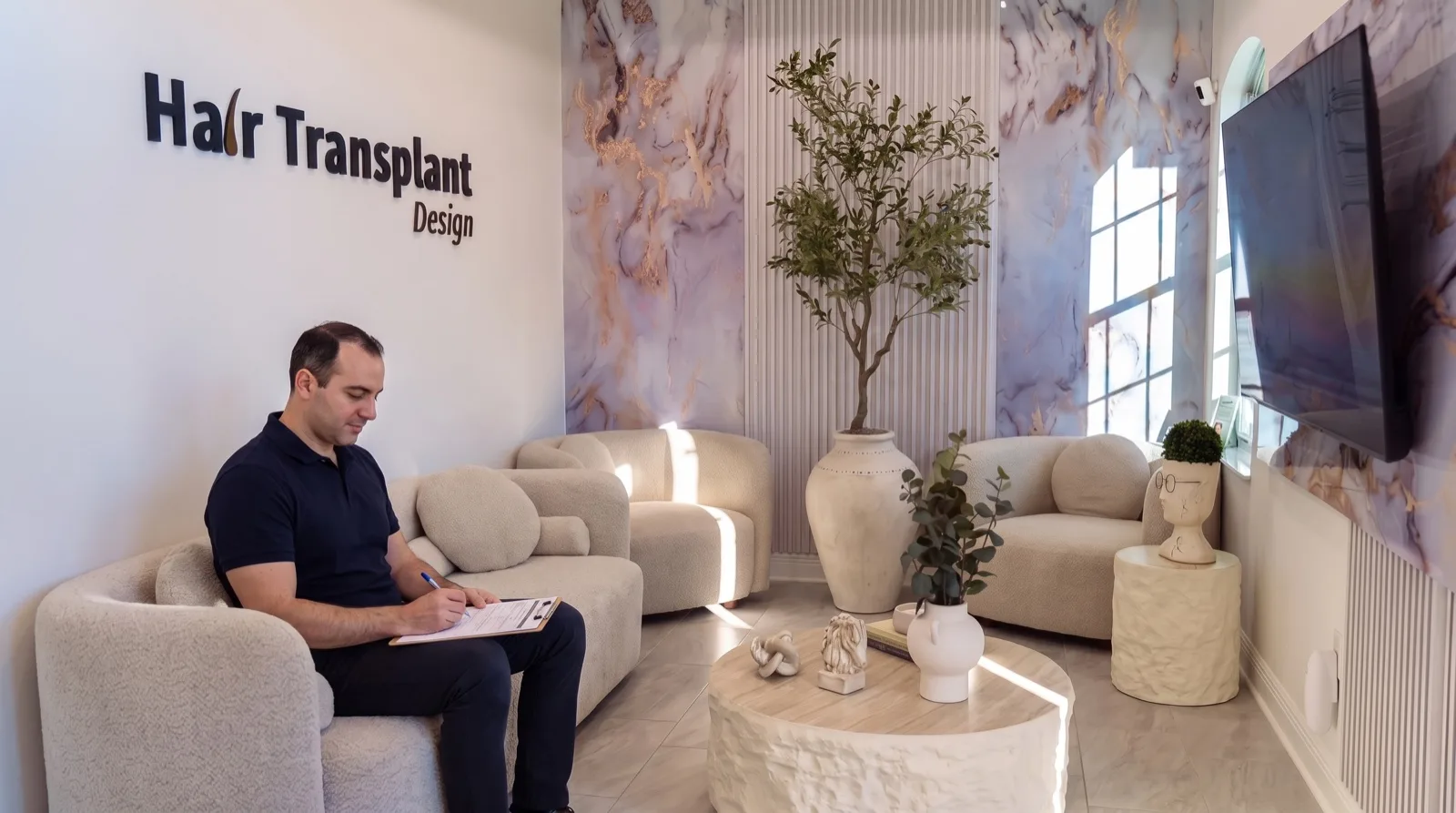
Patient sitting in the Hair Transplant Design waiting room, filling in his clinic paperwork on a clipboard

First thing01

Welcome & paperwork

You arrive, complete the clinic documents, and we answer any last questions. No rush.

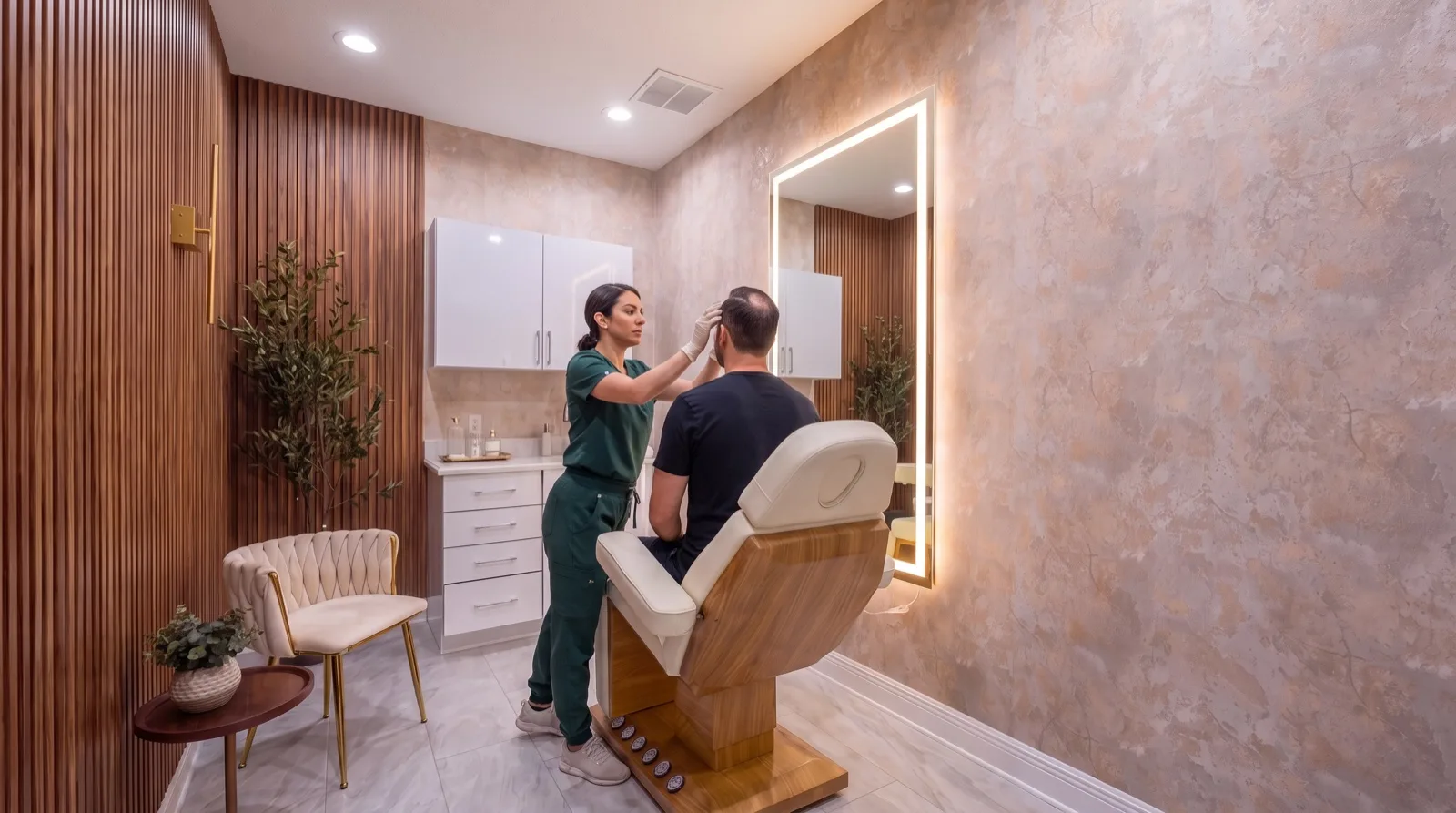
Patient in the treatment chair facing the lit mirror while his provider studies his hairline before surgery

Morning02

Design & preparation

Your new hairline is drawn and confirmed with you in the mirror. Then we prep the donor area and apply the local anesthesia.

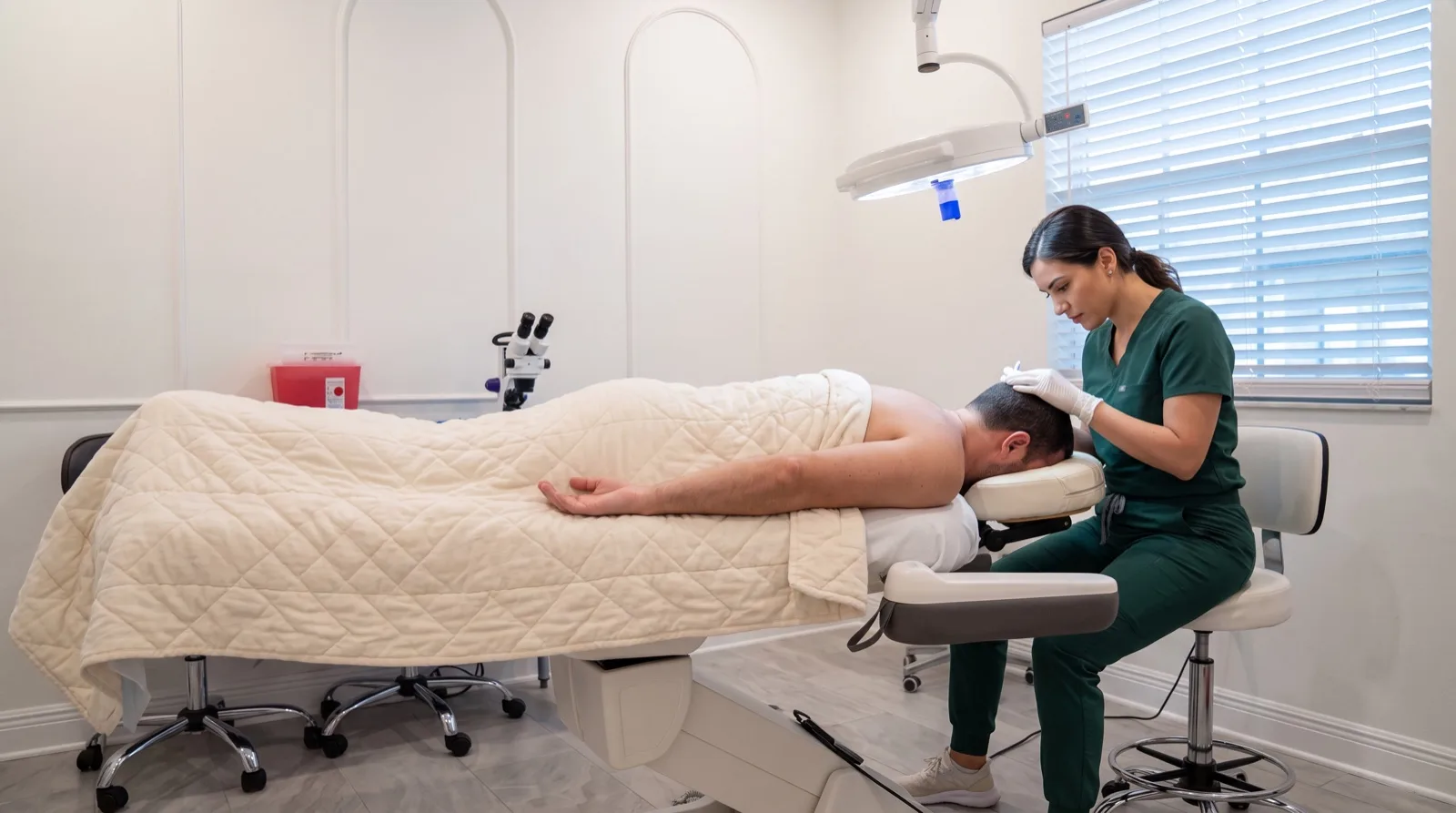
Patient lying face down along the treatment table under a blanket while his provider works on the donor area at the back of his head

Late morning03

Extraction, while you relax

You lie face down while we work on the donor area at the back of your head. You are numb and comfortable, and most patients listen to music the whole time.

Patient taking his midday break in the clinic lounge, with lunch on the table

Midday04

Lunch break

We pause, you eat and stretch your legs, and the team preps the implantation phase.

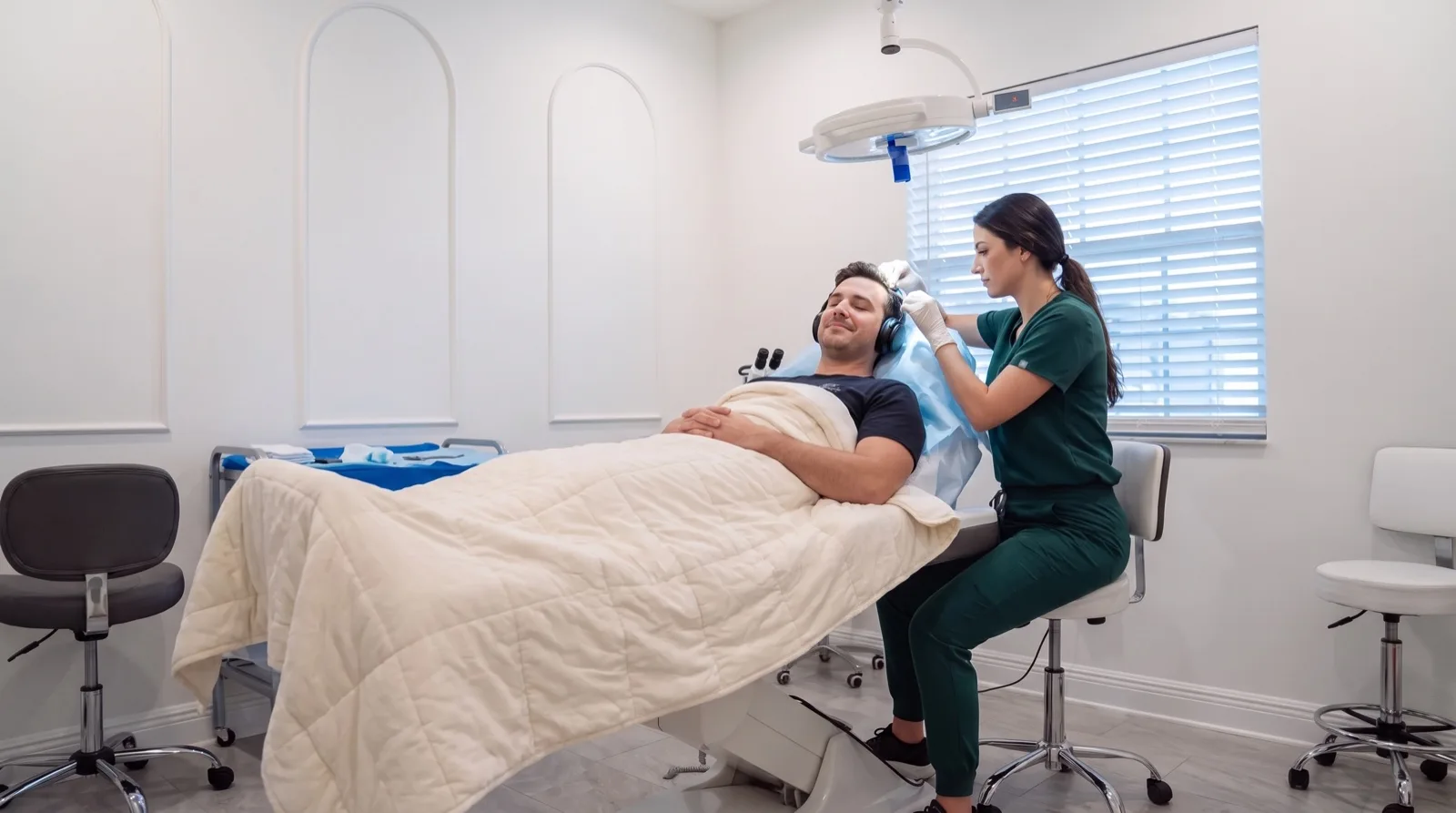
Patient reclined with headphones while his provider places grafts along the designed hairline

Afternoon05

Implantation, graft by graft

Each unit is placed into a sapphire-cut channel at the angle and direction your own hair grows, following the design agreed in the morning.

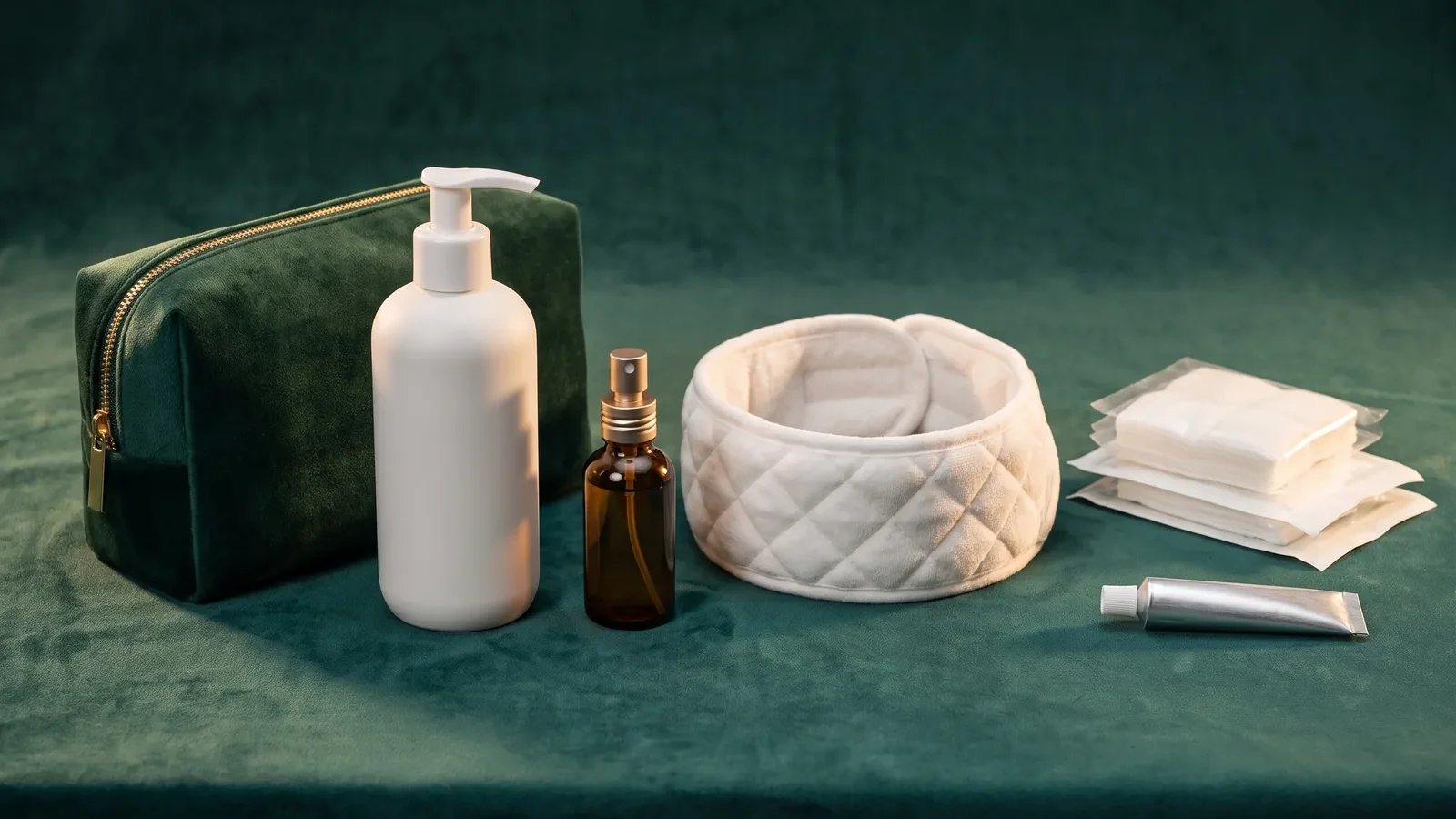
The aftercare kit handed to every patient: wash shampoo, spray, headband and dressings

End of day06

Care instructions & your kit

We walk you through every aftercare step and hand you your care kit: the wash shampoo and everything else your recovery needs. Then you go home.

A member of the Hair Transplant Design team explaining the complete hair transplant package The complete package, explained

FUE and PRP, on the Same Day

Your grafts do not travel alone. On surgery day we prepare PRP from a small sample of your own blood and apply it to the scalp where the grafts go.

Your own plasmaPlatelet-rich plasma is your blood, spun to concentrate the platelets and their growth factors. Nothing synthetic goes in.
Applied where the grafts goInjected into the recipient area on surgery day, so the growth factors are there while the grafts settle.
What the studies reportIn a randomized study of 40 FUE patients, the PRP group showed denser early growth and less shedding at four weeks. An earlier study of 20 patients found more grafts surviving when they were kept in PRP.
Support for the hair around themPRP also reaches the thinning hair next to the grafts, the frame your new hairline sits in.

Sources: Garg, J Cutan Aesthet Surg 2016 (40 patients); Uebel, Plast Reconstr Surg 2006 (20 patients). Small studies, and a recent systematic review calls the evidence promising but limited, so we present PRP as support for your transplant, not as a guarantee.

More about PRP at the clinic →

Who Performs Your FUE

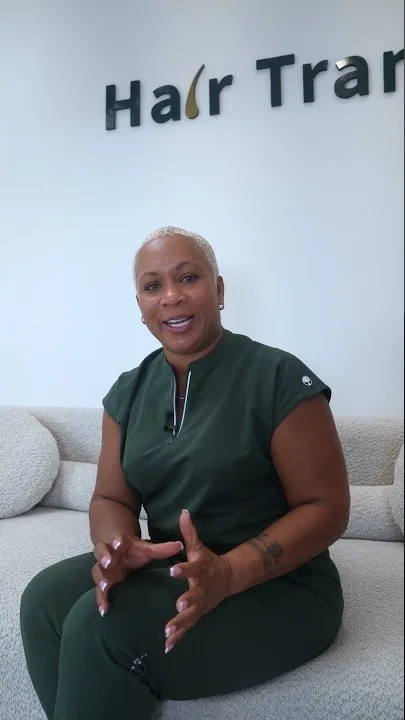
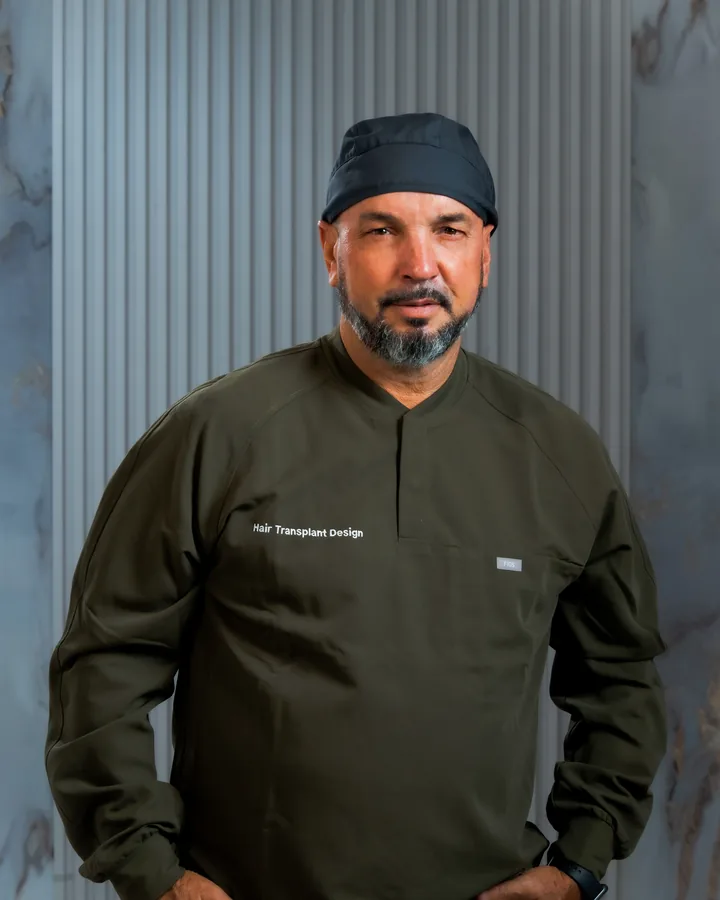
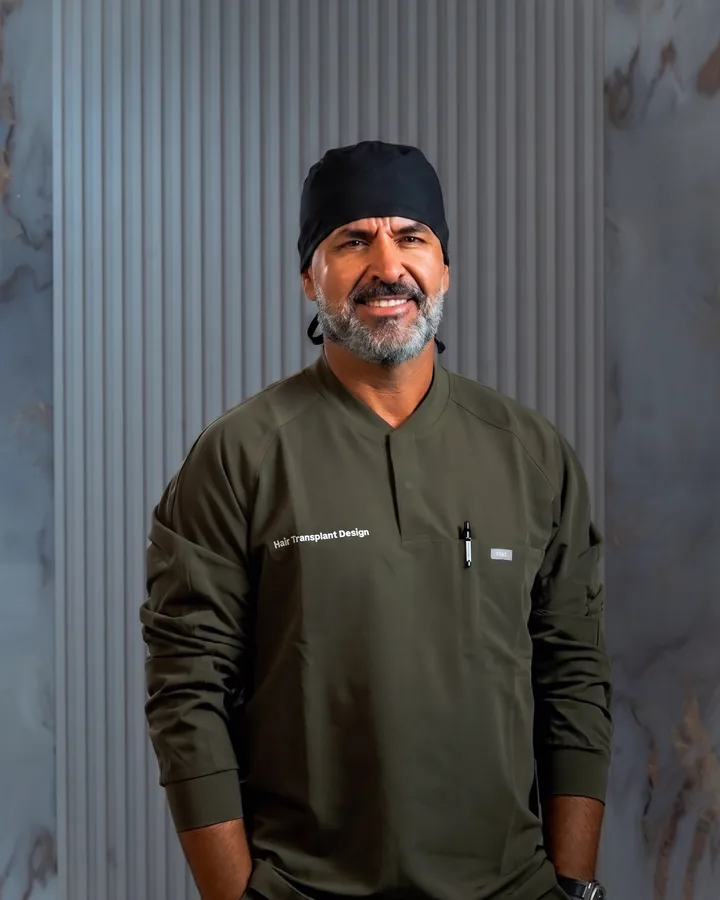
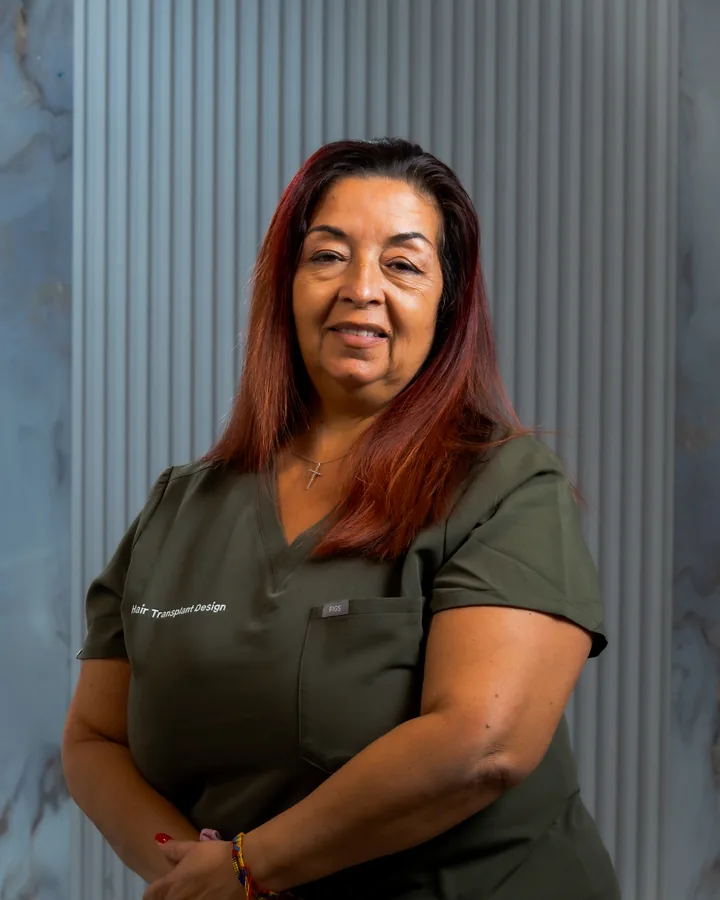
Two nurse practitioners licensed for the procedure, and the two assistants who work alongside them. On a large session, all four are on your case.

Eddy Jimenez Cruz, APRN at Hair Transplant Design in TampaEddy Jimenez CruzAPRN
Jeandy B. Diaz Gomez, APRN at Hair Transplant Design in TampaJeandy B. Diaz GomezAPRN
Alicia Marie Sastre, Medical Assistant at Hair Transplant Design in TampaAlicia Marie SastreMedical Assistant
Yraydee Urbano, Clinical Medical Assistant at Hair Transplant Design in TampaYraydee UrbanoClinical Medical Assistant
Meet the whole team →

What to Expect After Surgery

Four stages, one calendar. Timing varies from person to person.

Medical illustration: in the first weeks the transplanted hair sheds while the follicle stays anchored in the scalpThe first weeks

Most transplanted hairs shed. It looks like a step backward and it is expected.

Medical illustration: around month three a fine new hair emerges from the transplanted follicleAround month 3

Regrowth begins. Fine at first, then thicker.

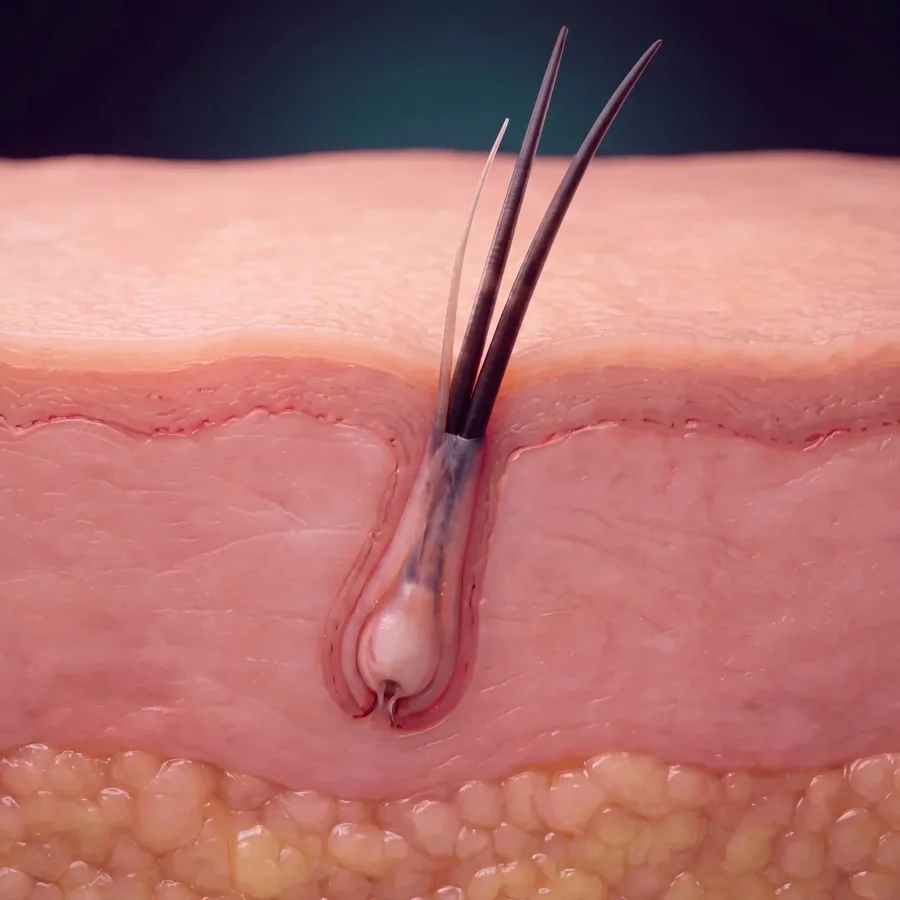
Medical illustration: between months six and twelve the unit grows two or three hairs of different thicknessMonths 6 to 12

Density keeps building. This is when people around you notice.

Medical illustration: at month twelve the transplanted follicle is fully integrated with full-length hairsMonth 12

We evaluate the result together, photo against photo.

Shedding in the first weeks and regrowth around month three are the pattern described in the literature; no two scalps keep the same calendar.

Day-by-day aftercare guide →

Before surgery: the pre-op checklist →

Up to Five Years at Your Side

We do not do the transplant and wave goodbye. Your procedure includes a follow-up program of up to five years: the same team follows your growth, adjusts what needs adjusting and answers the phone, from the first wash to the settled result.

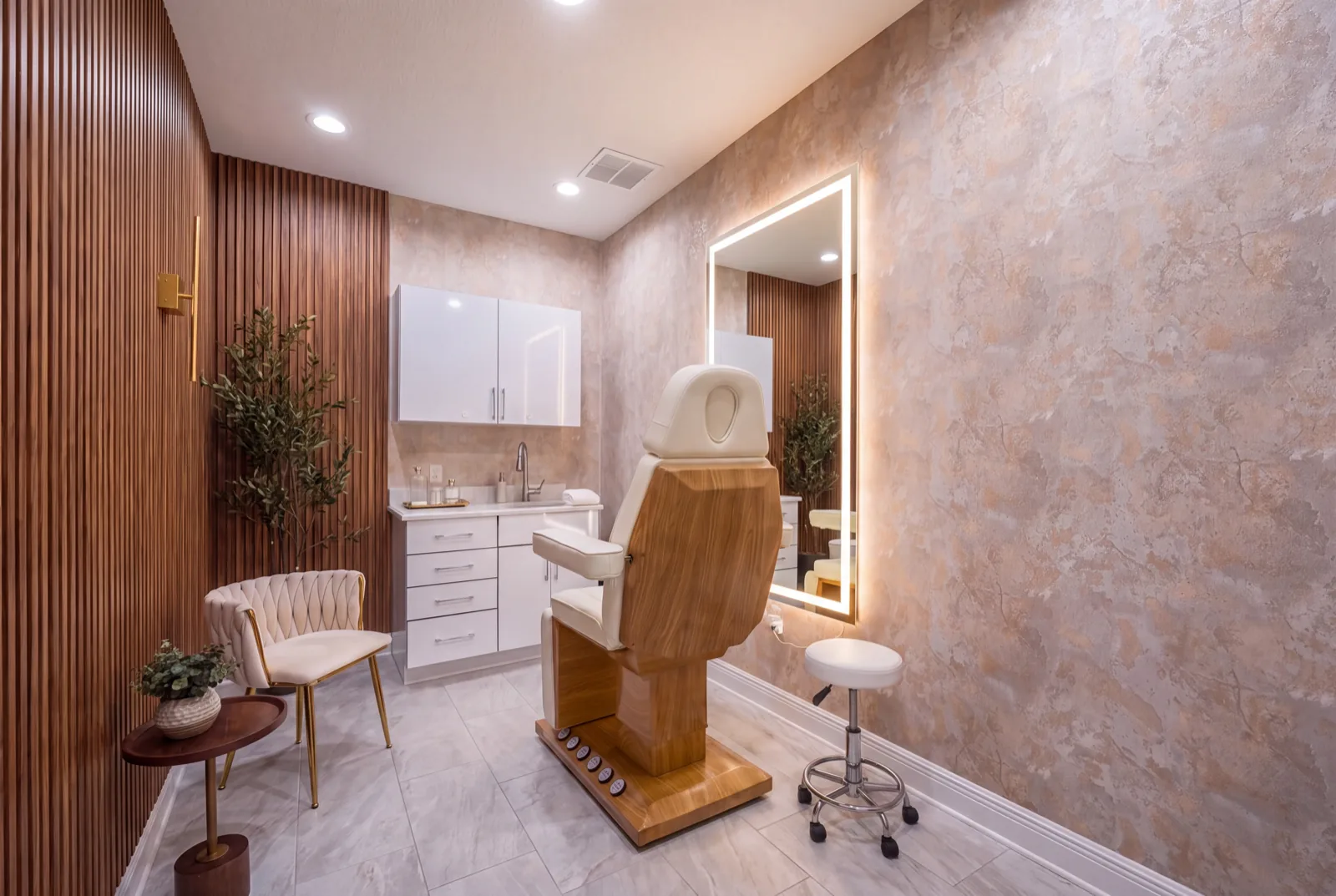
Treatment room at Hair Transplant Design in Tampa where follow-up visits take place
  • Scheduled check-ins. We look at your result at each stage of growth, not only in the first weeks.
  • Photo tracking. The same angles, the same light, so progress is measured instead of guessed.
  • The hair around it. We watch the hair next to the transplant too, and tell you what we see, even when the answer is that it needs nothing.
  • A number that answers. Any concern, at any point in the program, gets a real reply from the clinic.

The program is part of the price of every transplant, whichever session size you need.

What Does FUE Cost?

From $2,500

A 1,000-graft session is $2,500. Most full sessions are 4,000–4,500 grafts: $10,000–$11,250 at our regular $2.50 per graft, or $6,000–$6,750 on the current $1.50-per-graft special. Financing from $175/month.

FUE Questions, Answered

Does an FUE hair transplant leave a scar?

No linear scar. Each unit is extracted with a micro-punch under one millimeter wide; the tiny dot marks vanish from view once donor hair grows to normal length. That is the defining difference from the older FUT strip technique.

Is FUE painful?

It runs under local anesthesia. You are awake and comfortable, and most patients describe pressure rather than pain. Mild first-night soreness is normal and covered by the included medication.

How long does a session take?

A 2,000–3,500 graft session typically takes six to eight hours with breaks, completed in one day. Even our maximum 5,500-graft sessions finish in a single day.

When will I see results?

Transplanted hairs shed in the first weeks, completely normal. New growth starts around month 3–4, visible density builds from month 6, and the final result arrives at 12 months. We follow the whole journey with you.

What is the difference between FUE and FUT?

FUT removes a strip of scalp and leaves a permanent linear scar; FUE extracts follicular units one by one and leaves tiny dots that are not visible with short hair. FUE also means less downtime, which is why it is all we perform, always with sapphire-tip blades. Graft survival between the two is not settled by comparative studies, so we do not claim one grows better.

How many grafts do I need?

It depends on your stage of loss, donor density and goals. For receding temples (Norwood III) we usually plan 2,500 to 3,000 grafts, and the number rises with each stage. Our largest single session so far was 5,500 grafts. Your exact number is set at your consultation.
Can the hair come from someone else?

No. A hair transplant only works with your own hair. Follicles from another person are rejected by your immune system, the same way a donated organ would be without lifelong anti-rejection drugs, so hair from a relative or a friend is not an option. Every graft we place comes from your own permanent donor area.

Can beard or body hair be used?

Beard hair can, when the scalp donor area is not enough on its own. Beard hairs are thick and survive extraction well, so they are usually placed in the crown or mid-scalp to add coverage, not along the hairline, where their texture would stand out. Chest and other body hair is finer and grows shorter, with a less predictable yield, so it is a last resort. Whether any of this applies to you is settled at the consultation, once we have looked at your scalp donor area.

Can I choose my own hairline?

Yes. You draw it with us in the mirror before surgery. We bring the measurements that keep it natural as you age; you bring what you want to see. If the line you ask for is lower or straighter than will hold up, we tell you and show you the alternative first. How we design a hairline.

Find Out What FUE Can Do For Your Hairline

Free consultation: your graft count, your design and your exact price, in 30 minutes. No pressure, no obligation.

Schedule a Call

Free · No obligation

Schedule a Call

Tell us how to reach you. One of our specialists calls you back the same business day, in English or Spanish.

Rather talk now? 813-773-8013

Monday to Friday, 9am–5pm. Your details stay private and are used only to prepare your consultation.

Free · No obligation

Online Consultation

Complete the form below and our team gets back to you with the next steps, in English or Spanish.